In the last decade, the automotive industry has undergone a massive transformation — and Tesla has been at the heart of it. Founded in 2003 by a group of engineers and entrepreneurs (including Elon Musk), Tesla set out to prove that electric vehicles can be more than just eco-friendly alternatives — they can be powerful, fast, luxurious, and intelligent.
⚡ What Makes Tesla Cars Unique?
Tesla vehicles are not just electric cars. They represent a bold vision for the future of transportation. Here’s what sets them apart:
1. Fully Electric Powertrain
All Tesla models are 100% electric, meaning they produce zero emissions and eliminate the need for gasoline. With impressive battery technology, Tesla cars can travel between 272 to 405 miles on a single charge, depending on the model.
2. Autopilot and Full Self-Driving (FSD)
Tesla has taken a major leap with its Autopilot system — a suite of advanced driver-assist features that allow for automated steering, acceleration, and braking. With Full Self-Driving capability (currently in beta), Tesla is paving the way toward a future of autonomous driving.
3. Over-the-Air Software Updates
One of Tesla’s most innovative features is its ability to push software updates wirelessly. These updates improve vehicle performance, add new features, and even enhance driving range — without visiting a service center.
4. Minimalist Design and Premium Interiors
Tesla vehicles are known for their futuristic interiors. The cabin is clean and minimal, with a large touchscreen at the center that controls everything from navigation to entertainment.
🚘 Popular Tesla Models
Here’s a quick overview of Tesla’s current lineup:
Model 3: A compact sedan with an affordable price tag and great performance.
Model Y: A crossover SUV offering more space and versatility.
Model S: A premium luxury sedan with lightning-fast acceleration (0-60 mph in under 2 seconds with the Plaid version).
Model X: A high-end SUV with unique Falcon Wing doors and advanced tech.
Cybertruck (coming soon): A futuristic all-electric pickup truck designed for utility and durability.
🔋 Charging and Infrastructure
Tesla has built a global network of Superchargers — high-speed charging stations that can replenish up to 200 miles of range in just 15 minutes. Tesla owners also have access to home charging options, making daily use extremely convenient.
🌍 Environmental Impact
By eliminating tailpipe emissions and reducing reliance on fossil fuels, Tesla is helping combat climate change. The company’s mission is clear: “To accelerate the world’s transition to sustainable energy.”
💡 Final Thoughts
Tesla has not only changed how we think about cars but also redefined what they can be. With groundbreaking technology, a commitment to sustainability, and a bold vision for the future, Tesla continues to lead the electric vehicle revolution.
Whether you’re a car enthusiast, a tech lover, or simply someone who cares about the environment, Tesla offers a glimpse into the future — and it’s electric.
The electric vehicle (EV) revolution is in full swing, and one of the most compelling entries in this new wave of innovation is the Hyundai Ioniq 5. […]
Striking Design that Breaks the Mold
One of the first things you’ll notice about the Hyundai Ioniq 5 is its unique, retro-futuristic design. […]
Image Suggestion: Ioniq 5 side profile Alt Text: Side view of Hyundai Ioniq 5 showcasing its futuristic design
Spacious and Tech-Savvy Interior
Step inside the Ioniq 5, and you’ll find a modern, airy cabin designed for comfort and flexibility. […]
Bullet List Suggestion:
Dual 12.3-inch displays
Augmented Reality Head-Up Display
Eco-friendly interior materials
Vehicle-to-Load (V2L) power supply
Image Suggestion: Ioniq 5 interior dashboard Alt Text: Interior of Hyundai Ioniq 5 with digital displays
Performance and Driving Experience
The Ioniq 5 isn’t just about style and comfort — it’s also a thrill to drive. […]
Highlight Block: 0–100 km/h in just 5.2 seconds (AWD variant)
Charging and Range
The Ioniq 5 uses Hyundai’s E-GMP platform and supports ultra-fast charging. […]
Key Specs Table (use WordPress Table Block):
Safety and Driver Assistance Features
Hyundai has equipped the Ioniq 5 with top-tier safety and driver-assist features. […]
Bulleted List Suggestion:
Highway Driving Assist 2
Forward Collision-Avoidance Assist
Blind Spot View Monitor
Remote Smart Parking Assist
Environmental Impact and Sustainability
Hyundai has also made a strong push toward sustainability with the Ioniq 5. […]
Pricing and Availability
The Ioniq 5 is competitively priced in the mid-range EV market. […]
Conclusion: Why Choose the Hyundai Ioniq 5?
With its combination of futuristic design, powerful performance, and green technology, the Ioniq 5 is redefining what we expect from electric cars. […]
Kathmandu, May 3, 2025 — The Nepal Oil Corporation (NOC) has announced a fresh reduction in fuel prices, bringing relief to consumers across the country. The revised rates came into effect from midnight on May 1, 2025, following the latest shipment price update from Indian Oil Corporation, Nepal’s sole supplier of petroleum products.
Revised Fuel Prices
Under the new pricing structure, petrol prices have been cut by Rs 2 per litre, while diesel and kerosene have each seen a Rs 1 per litre reduction. Similarly, the cost of domestic aviation fuel has dropped by Rs 4 per litre, and international aviation fuel supplied at Kathmandu has been slashed by USD 29 per kiloliter.
Price Variation by Region
Fuel prices in Nepal are regionally categorized due to transportation costs and distribution logistics. Here’s a breakdown of the new prices by zone:
Kathmandu Valley, Pokhara, Dipayal:
Petrol: Rs 158 per litre
Diesel & Kerosene: Rs 145 per litre
Category A Cities (Chaarali, Biratnagar, Janakpur, Amlekhgunj, Nepalgunj, Dhangadhi, Birgunj):
Petrol: Rs 155.50 per litre
Category B Cities (Surkhet, Dang):
Petrol: Rs 157 per litre
Why the Price Drop?
These reductions are part of NOC’s routine pricing revisions, which are conducted every 15 days. The adjustments reflect changes in international oil prices and the latest import costs quoted by the Indian Oil Corporation.
With global oil prices witnessing slight downward trends in recent weeks, this cut is expected to provide financial relief to the general public and transport sector, especially as fuel remains a significant component of household and operational expenses in Nepal.
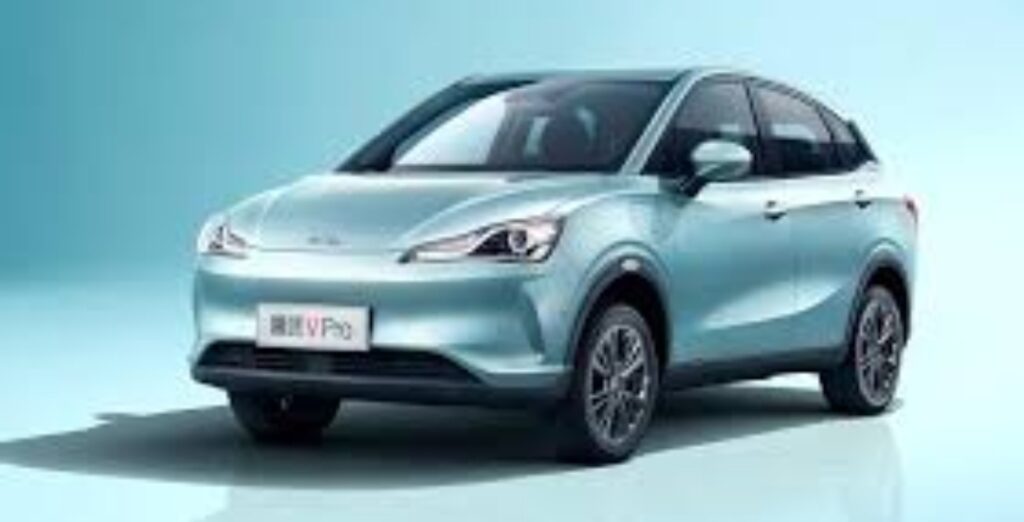
Neta V Electric Car: The Affordable Urban EV Coming to India
NetaV
India’s electric vehicle landscape is evolving rapidly, and the upcoming launch of the Neta V electric car adds a promising new option for budget-conscious buyers. Originally developed by Hozon Auto, a Chinese EV manufacturer, and introduced in India by Enertech Motors, the Neta V is set to bring affordability and practicality to the electric mobility space.
At a Glance: What Is the Neta V?
The Neta V is a compact, all-electric crossover SUV that offers modern features, a city-friendly design, and a driving range suitable for daily commutes. With a focus on affordability, it targets entry-level EV customers in India, much like it has in markets such as China and Southeast Asia.
Core Specifications
Battery Capacity: 38.5 kWh
Estimated Driving Range: Up to 401 km (NEDC cycle; approx. 300 km in real-world use)
Electric Motor Output: 70 kW (equivalent to 95 horsepower)
Torque: 150 Nm
Top Speed: Around 120 km/h
Charging Time:
AC charging: About 8 hours
DC fast charging: 30–45 minutes (30% to 80%)
Drive Type: Front-wheel drive
Boot Capacity: 335 liters
Dimensions (L x W x H): 4070 mm x 1690 mm x 1540 mm
Interior & Comfort Features
Despite being positioned as an entry-level EV, the Neta V doesn’t skimp on features. The cabin is modern, clean, and comes equipped with:
A 14.6-inch touchscreen infotainment system
Fully digital driver display
Voice assistant powered by AI
Smart keyless entry with push-button start
Fabric or leatherette seat options
Rear-view camera and parking sensors
Over-the-air (OTA) updates for software improvements
Safety Essentials
Neta V focuses on essential safety features for city driving:
Dual front airbags
Anti-lock braking system (ABS) with EBD
Rear parking sensors
Electronic Stability Control (ESC)
Tyre Pressure Monitoring System (TPMS)
Expected Price in India
Although the official pricing hasn’t been declared yet, the Neta V is likely to cost between ₹10 lakh and ₹12 lakh (ex-showroom). This puts it in direct competition with other budget EVs like the Tata Tiago EV, MG Comet EV, and Citroen eC3.
Comparison: Neta V vs. Competitors
Launch Timeline and Market Entry
Enertech Motors has announced plans to assemble the Neta V in India, likely to help with pricing and localization. The official launch is expected in mid to late 2025, with bookings opening shortly after.
Why Neta V Could Be a Smart EV Choice
The Neta V offers an appealing combination of affordability, practical range, and essential tech features. It caters especially well to first-time EV buyers and daily city drivers looking for a low-cost, eco-friendly vehicle.
With proper service infrastructure and pricing, the Neta V could emerge as one of the most popular electric cars in India’s mass market segment
With the growing demand for sustainable mobility and electric vehicles in India, the entry of the Neta V electric car marks a significant milestone. Developed by the Chinese automaker Hozon Auto and brought to India by Enertech Motors, the Neta V is expected to become a game-changer in the affordable EV segment. Here’s everything you need to know about the Neta V, including its features, expected price, and market positioning.
Overview of the Neta V
The Neta V is a compact electric SUV designed to appeal to budget-conscious urban buyers. It first debuted in China in 2020 under the Hozon Auto brand and quickly gained popularity due to its sleek design, practical features, and low operating costs. Now, with India shifting focus towards EV adoption, Neta V arrives at a time when the demand for reliable and affordable electric cars is surging.
Key Specifications
Battery Pack: 38.5 kWh lithium-ion battery
Range: Up to 401 km (as per NEDC cycle; expect around 300 km in real-world conditions)
Motor Output: 70 kW (95 hp), with 150 Nm of torque
Top Speed: Approximately 120 km/h
Charging Time: Around 8 hours on a standard AC charger; fast charging supported
Drive Type: Front-Wheel Drive (FWD)
Dimensions: Length – 4,070 mm | Width – 1,690 mm | Height – 1,540 mm
Boot Space: 335 liters
Interior and Features
Despite its entry-level pricing, the Neta V does not compromise on interior comfort or tech features. The cabin offers a modern look with:
A large 14.6-inch touchscreen infotainment system
Digital driver display
AI-based voice assistant
Keyless entry and start
Climate control
Synthetic leather seats
Rear camera and parking sensors
It’s also equipped with connected car technology and over-the-air (OTA) updates.
Expected Price in India
Although the official price is yet to be announced, the expected price range is between ₹10 lakh to ₹12 lakh (ex-showroom). This places it well within reach for buyers considering EVs like the Tata Tiago EV or MG Comet EV. If Enertech Motors manages local assembly or manufacturing in the future, the cost could reduce further.
Safety Features
Neta V comes with basic safety features including:
Dual front airbags
ABS with EBD
Rear parking sensors
Electronic Stability Control (ESC)
Tyre Pressure Monitoring System (TPMS)
These features make it a well-rounded car for city commuters prioritizing both safety and sustainability.
Competition in the Market
In India’s budget EV segment, the Neta V will compete directly with:
Tata Tiago EV
MG Comet EV
Citroen eC3
Tata Punch EV (entry variant)
Its unique mix of styling, range, and pricing could make it an attractive option for first-time EV buyers.
Launch and Availability
As of now, Enertech Motors has confirmed plans to assemble the Neta V in India and has showcased the vehicle at various expos in 2024. The commercial launch is expected by mid to late 2025, with bookings likely to open soon after the official announcement.
Final Thoughts
The Neta V brings a refreshing new option to India’s EV scene — offering an impressive blend of range, features, and affordability. If priced competitively and backed by a strong service network, it has the potential to accelerate EV adoption in the country, especially among young urban drivers and environmentally conscious families.
As the Indian EV market continues to evolve, the Neta V could well be the stepping stone for many towards a cleaner, greener future on wheels.
The White House denies violating a judge’s order to halt the deportations of alleged Venezuelan gang members to El Salvador, a situation that, if proven otherwise, could push legal battles over presidential authority closer to a constitutional crisis.
The controversy stems from the administration’s use of the 18th-century Alien Enemies Act to expel Venezuelan migrants—a rare and contentious move that some view as executive overreach.
U.S. District Judge James Boasberg temporarily blocked the deportations to assess the implications of invoking the act. He also stated in court that any flights already in the air should return to the U.S. However, the administration announced on Sunday that 250 deportees, allegedly linked to the Tren de Aragua gang, were already in El Salvadorian custody.
White House Press Secretary Karoline Leavitt’s carefully worded response on Sunday further fueled speculation about whether the administration defied the judge’s directive.
“The Administration did not ‘refuse to comply’ with a court order. The order, which had no lawful basis, was issued after terrorist (Tren de Aragua) aliens had already been removed from U.S. territory,” Leavitt stated.
She also argued that “a single judge in a single city cannot direct the movements of an aircraft carrier full of foreign alien terrorists who were physically expelled from U.S. soil.”
Notably, Leavitt’s reference to the judge’s “written” order, along with the lack of clarity on when the migrants arrived in El Salvador, raises questions. Additionally, her use of the phrase “aircraft carrier” adds to the confusion, as the White House does not have the authority to determine the legality of court orders.
During his return to Washington from Florida on Sunday, former President Trump defended his administration’s actions but sidestepped a direct answer on whether the judge’s order had been followed.
“These were bad people. That was a bad group of, as I say, hombres,” Trump said. When pressed on whether his administration had violated court orders, he responded, “You’d have to speak to the lawyers about that.”
The timeline of Boasberg’s orders and their alignment with the deportation operation remains unclear. If the administration disregarded the directive, it could mark one of its most serious legal challenges to date and heighten concerns about presidential defiance of the rule of law.
Attorneys from the ACLU and Democracy Forward filed an overnight request asking Boasberg to seek sworn declarations clarifying whether officials complied with his orders. They are seeking details on whether flights departed after the judge’s instructions, whether planes subject to the order were in the air, and whether deported individuals were handed over to a foreign government after the temporary halt was issued.
Separately, a Boston judge is set to hear a case on Monday regarding allegations that Customs and Border Protection officials ignored an order blocking the deportation of Dr. Rasha Alawieh, a Brown University professor and U.S. visa holder. Reuters reported that she was deported to Lebanon after returning from a family visit abroad.
Trump is acting now and not waiting for the consequences
The unfolding events reflect a broader pattern.
Trump is exercising vast executive power, often acting first and leaving courts and political opponents to challenge him only after his decisions have already triggered nearly irreversible consequences.
His use of the Alien Enemies Act to accelerate deportations is particularly striking, as the law is traditionally reserved for wartime.
At the same time, a crackdown on student protests—exemplified by the arrest of a Palestinian green card holder—is being defended on the basis that his anti-Israel stance undermines U.S. foreign policy. Critics, however, see it as an effort to suppress First Amendment rights and dissent within academia, led by a White House unconstrained by constitutional limits.
Adding to the controversy, Trump abruptly shut down the taxpayer-funded international broadcaster Voice of America over the weekend, reigniting debates over whether he can unilaterally disregard spending mandated by Congress. This move followed his chilling statement on Friday that media outlets not aligned with his MAGA agenda are “corrupt and illegal.”
Many of Trump’s supporters elected him to dismantle institutions they see as disconnected from their values, culture, and economic interests. Polls suggest that among his base, these aggressive actions remain widely popular.
His strategy is to act swiftly, capitalizing on the fact that checks on presidential power are often applied only in hindsight. By the time legal challenges emerge, the damage is done—just as an agency dismantled by Elon Musk’s hypothetical “Department of Government Efficiency” could remain in ruins even if a judge later orders its restoration.
Deportations to El Salvador spark legal dispute
The 1798 Alien Enemies Act has a history of misuse that has left lasting scars on American history. It damaged the legacy of the nation’s second president, John Adams, and later served as justification for the internment of Japanese Americans during World War II.
The law states it can be enforced when the U.S. is at war with a foreign nation or if an invasion or attack is attempted, threatened, or carried out against U.S. territory—provided the president makes a formal proclamation.
However, the U.S. is not at war with Venezuela. While Trump has repeatedly claimed the country is experiencing an “invasion” of undocumented migrants, criminals, and gang members, the power to declare war rests with Congress, not the president. This raises immediate concerns about whether Trump exceeded his legal authority in ordering the deportations.
Judge James Boasberg issued a temporary restraining order to allow time for these legal questions to be fully examined.
On CNN’s State of the Union Sunday, South Dakota Republican Sen. Mike Rounds said he was unsure whether the administration had disregarded the judge’s order but emphasized, “We expect the executive branch to follow the law… we are a constitutional republic, and we will follow those laws.”
Meanwhile, Secretary of State Marco Rubio announced on X that over 250 alleged members of the Tren de Aragua gang had been deported to El Salvador, where they would be held “in their very good jails at a fair price.” The U.S. is paying $6 million for their detention.
Now, the timeline of court rulings and deportations is under scrutiny.
Boasberg initially blocked the removal of five individuals who had challenged the order in court. After a subsequent hearing, he expanded the ruling to cover all noncitizens in U.S. custody affected by Trump’s proclamation. Attorney General Pam Bondi and other Justice Department officials argued in a Sunday filing that “some gang members” were deported between Boasberg’s two rulings, but the five original plaintiffs were not among them. The administration has already appealed the judge’s decisions.
Beyond Boasberg’s order, the case has wider implications.
International law generally forbids deporting individuals to countries where they may face persecution. Given the harsh and overcrowded prison conditions in El Salvador, this situation could meet that threshold. Additionally, Salvadoran President Nayib Bukele—often praised by Trump officials—faces allegations of constitutional and human rights violations that clash with longstanding American foreign policy values.
Critics are also questioning why Trump invoked the Alien Enemies Act when other legal avenues exist to expel gang members. The administration’s lack of transparency regarding the identities of those deported raises concerns that undocumented migrants with no gang affiliations could have been wrongfully swept up in the process, denied their legal rights, and sent into dangerous conditions.
“Giving them this wide latitude to just… claim that anybody is anything is wrong,” Texas Democratic Rep. Jasmine Crockett told CNN. “We do have courts, we do have processes, we do have laws, and we should just go ahead and use those.”
Yet, politically, Trump’s aggressive approach benefits him by reinforcing his strongman image. It allows him to frame critics of his policies as defenders of criminals, despite broader concerns about legality and human rights.
“Thank you to El Salvador and, in particular, President Bukele, for your understanding of this horrible situation, which was allowed to happen to the United States because of incompetent Democrat leadership,” Trump wrote on Truth Social on Sunday.
Free speech concerns raised by detention of green card holder
The administration is also under scrutiny for its handling of the detention of former Columbia University student Mahmoud Khalil, a Palestinian refugee whose green card was revoked due to his involvement in last year’s protests over the Israel-Hamas war.
Key legal questions remain: Was Khalil arrested for actions that legally qualify as material support for terrorism, or is he being detained in violation of his First Amendment rights as a U.S. legal permanent resident? His supporters argue he was singled out for speaking against Israel’s military actions in Gaza following the October 7, 2023, attacks.
On CBS’ Face the Nation Sunday, Secretary of State Marco Rubio claimed it was “very simple” to see that Khalil had misrepresented his intentions when applying for a green card, as his political activities later included participation in pro-Hamas events. “We never should have allowed him in, in the first place,” Rubio said. “If he had told us, ‘I’m going over there and I’m going over there to become the spokesperson and one of the leaders of a movement that’s going to turn one of your allegedly elite colleges upside down’—we never would have let him in.” He further argued that Khalil’s actions ran “counter to the foreign policy interest of the United States.”
U.S. law states that anyone who “endorses or espouses terrorist activities or persuades others to do so” is ineligible for a visa. However, a key question in Khalil’s case is whether those restrictions apply to a legal permanent resident already in the country.
Rubio did not provide evidence that Khalil committed a crime, materially supported terrorism, or explicitly advocated for terrorist activities. If his actions were limited to voicing support for Hamas—however controversial or offensive to many Americans—he could be protected under the First Amendment, which prohibits government restrictions on free speech.
The case has raised alarm because it suggests that any non-citizen immigrant could be arrested and deported if their speech is deemed contrary to U.S. foreign policy by the president or his administration.
Khalil’s legal battle is ongoing. A federal judge has blocked his deportation, and he remains in Immigration and Customs Enforcement (ICE) custody. Like the case of the Venezuelan deportations, this issue appears likely to reach the Supreme Court, where justices will face an unprecedented series of cases shaping both Trump’s presidency and the broader scope of executive power.
At the core of all these legal disputes is a fundamental question: Does Trump possess the sweeping authority he has claimed, marking the most aggressive assertion of presidential power in modern history?
Trump, however, is not waiting for the courts to decide. He continues to push forward with major changes to U.S. governance, values, and culture—shifts that could prove difficult for future presidents or Congress to undo.