Record U.S. Oil Production in March 2025—But Demand Is Telling a Different Story
The U.S. oil industry just hit a new milestone. According to freshly released data from the Energy Information Administration (EIA), U.S. crude oil production reached an all-time high of 13.488 million barrels per day in March 2025. This breaks the previous record set in October 2024 and reflects steady momentum from major oil-producing regions like the Permian Basin and the Gulf Coast.
But while the supply side is booming, the demand side is showing clear signs of softening—a concerning signal for energy markets heading into the summer.
Supply Strength: U.S. Production Hits New High
In just one month, U.S. crude output rose from 13.153 million barrels per day in February to 13.488 million in March—a sign of resilience and efficiency among producers, even as drilling activity slows nationwide. This increase underscores how key players in the Permian and Gulf Coast regions are continuing to pump at near-maximum capacity.
Demand Weakens: Lowest Petroleum Consumption in a Year
While supply surges, demand is faltering. Total petroleum products supplied—a broad gauge of domestic oil consumption—fell to 19.95 million barrels per day in March, the lowest level in over a year. That’s down from 20.225 million bpd in February and continues a trend of monthly declines since January.
This drop in demand is raising red flags, especially for refiners and exporters who typically rely on a seasonal consumption boost during the summer driving season. Rising inventories add another layer of concern, indicating a potential oversupply in the coming months.
Imports and Drilling Activity Tell a Mixed Story
Crude oil imports in March totaled 178.4 million barrels, slightly higher than February due to the extra day in the month. However, on a daily average basis, imports were lower. Meanwhile, imports of finished products like gasoline blending components and jet fuel hit 17.8 million barrels, further emphasizing the U.S. reliance on refined fuels even amid record domestic output.
Drilling activity continues to decline. In May, the U.S. rig count fell for the fifth consecutive week, dropping to just 563 active rigs, the lowest since late 2021. The number of oil-directed rigs fell to 461, with significant reductions in both New Mexico and the Permian. The message from producers is clear: capital discipline and shareholder returns remain top priorities.
The Big Picture: More Oil, Less Drilling, Weaker Demand
This current energy landscape presents a striking paradox: The United States is producing more oil than ever while operating fewer rigs and facing softening domestic demand. As we head into the high-demand summer season, the imbalance between strong supply and shrinking consumption could significantly impact pricing, exports, and refinery margins.
Final Thoughts: A Summer of Uncertainty for Oil Markets
The U.S. oil industry is entering summer 2025 with record-breaking production but growing uncertainty. If demand doesn’t pick up and inventories continue to build, producers may be forced to rethink their strategies. With global economic signals mixed and domestic consumption faltering, the coming months will test the market’s ability to adapt.
Stay tuned as we continue to monitor key trends shaping the future of oil production, demand, and energy policy in the U.S.
If you’re thinking about switching to an electric vehicle in Nepal, there’s a good chance the BYD Atto 3 has already caught your eye—and for good reason. It’s not just another EV. It’s a statement of style, innovation, and a greener tomorrow.
Whether you’re a daily commuter, a weekend road-tripper, or someone looking to cut down on fuel costs, the Atto 3 offers something that clicks with everyone.
🌟 First Impressions – Design That Turns Heads
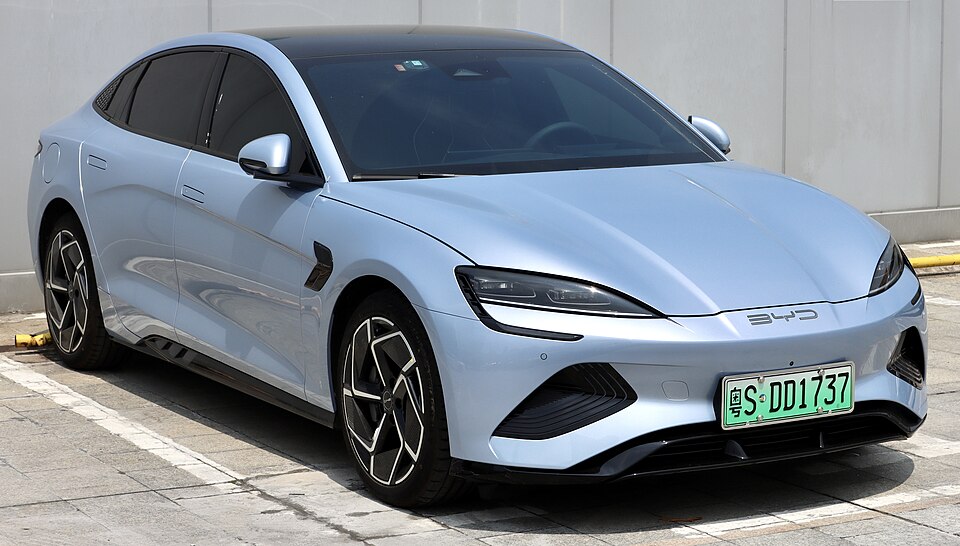
From the moment you lay eyes on the BYD Atto 3, you know it’s something special. It carries a futuristic charm with its flowing lines, bold front grille, and LED lighting. The crossover SUV stance gives it road presence, but it’s not overly bulky—just the perfect balance between sporty and sleek.
Step inside, and the cabin greets you with an open, airy layout. The rotating infotainment display is not just a gimmick—it’s a practical and fun touch. The panoramic sunroof, layered dashboard, and soft ambient lighting make every drive feel premium.
🔋 Power Meets Practicality – Performance & Battery Life
Under the hood (or rather, beneath the floor), the Atto 3 is all-electric. You get two battery variants:
🔹 49.92 kWh (Advanced Variant)
🔹 60.48 kWh (Superior Variant)
The larger battery gives you up to 420 km of real-world range, which means less time charging and more time driving. Whether you’re navigating Kathmandu’s busy lanes or taking a weekend trip to Pokhara, this car won’t leave you stranded with range anxiety.
Charging is pretty straightforward too:
🚀 Fast Charging: 0 to 80% in around 45 minutes
🏠 Home Charging (AC): Plug it overnight and you’re good to go the next day.
🧠 Smart & Safe – Features You’ll Love
Safety is where the BYD Atto 3 truly shines. It’s scored a 5-star Euro NCAP safety rating, making it one of the safest EVs in its class. Plus, you get:
Adaptive Cruise Control
Lane-Keep Assist
Blind Spot Monitoring
Multiple Airbags
Rear Cross-Traffic Alert
On top of that, the Vehicle-to-Load (V2L) feature lets you use your car as a power bank—perfect for camping or power cuts!
💸 BYD Atto 3 On-Road Price in Nepal (May 2025)
If you’re wondering about the cost, here’s the latest pricing:
🔹 Advanced Variant – NPR 56.90 Lakhs
🔹 Superior Variant – NPR 67.80 Lakhs
The price includes an 8-year or 160,000 km warranty on the battery and motor, which adds solid peace of mind.
👍 What We Love (and What Could Be Better)
Why You’ll Love It:
✅ Excellent range for Nepal’s roads ✅ Spacious, futuristic interior ✅ Smooth, silent, and fun to drive ✅ Loaded with safety features ✅ Strong value-for-money proposition
Room for Improvement:
❌ DC fast charging could be quicker ❌ Service availability is still growing outside major cities
🏁 Final Thoughts – Is the BYD Atto 3 Worth It?
Absolutely. The BYD Atto 3 isn’t just a car—it’s a shift toward a smarter, cleaner, and more exciting way to drive. It’s stylish, reliable, and efficient, and it makes the transition to electric feel completely natural.
If you’ve been on the fence about getting an EV, the Atto 3 might just be the perfect place to start your journey. It brings together all the right ingredients—looks, performance, safety, and value.
Nepal Oil Corporation’s Price Fluctuations: A Reflection of Public Sentiment
In the heart of Nepal’s economic landscape, the Nepal Oil Corporation (NOC) stands as a pivotal entity, influencing the daily lives of millions. As the sole importer and distributor of petroleum products in the country, its pricing decisions resonate deeply with the populace, affecting everything from household budgets to transportation costs.
Recent Price Adjustments: A Year in Review
Over the past year, NOC has made several adjustments to fuel prices, reflecting changes in international oil markets and the pricing structure of its sole supplier, the Indian Oil Corporation. Notably:
These fluctuations underscore the volatility of global oil markets and the challenges faced by NOC in maintaining stable pricing.
The Human Impact: Stories from the Ground
For many Nepali citizens, these price changes are more than just numbers; they have tangible effects on daily life. A taxi driver in Kathmandu, for instance, expressed concern over the rising operational costs due to fuel price hikes, which directly impact his earnings. Similarly, a homemaker in Pokhara highlighted how increased fuel prices strain her household budget, forcing her to make difficult choices in daily expenditures.
Infrastructure Developments: A Glimpse of Hope
Amidst these challenges, there have been positive strides. The Motihari-Amlekhganj pipeline, a 69-kilometer trans-border petroleum pipeline between India and Nepal, has enhanced the efficiency of fuel transportation, reducing dependency on road tankers and ensuring a more stable supply. Kathmandu Post+5Wikipedia+5Wikipedia+5
Looking Ahead: Striving for Stability
While NOC continues to navigate the complexities of global oil markets, there is a collective hope among Nepali citizens for more stable and predictable fuel pricing. Transparent communication, infrastructure investments, and strategic planning are essential to mitigate the impact of global price volatility on the local populace.
In conclusion, the journey of Nepal Oil Corporation reflects the broader economic challenges and aspirations of the nation. As it endeavors to balance market dynamics with public welfare, the stories of everyday Nepalis serve as a poignant reminder of the human side of economic policies.
In the rapidly evolving landscape of electric vehicles (EVs), BYD (Build Your Dreams) has emerged as a formidable player not just in China, but on the global stage. From pioneering battery technology to rolling out innovative electric sedans, SUVs, and buses, BYD has firmly positioned itself as a leader in green transportation. This article explores the rise of BYD in the EV sector, its cutting-edge technologies, top-selling models, and its global impact in the journey towards a sustainable future.
The Rise of BYD: From Batteries to Global EV Leader
Founded in 1995 in Shenzhen, China, BYD initially focused on rechargeable batteries for consumer electronics. By the early 2000s, the company ventured into the automotive industry, and in 2008, it launched its first plug-in hybrid, the F3DM. This marked the beginning of its ambitious move toward electrification.
What sets BYD apart is its vertical integration strategy—the company designs and manufactures its own batteries, semiconductors, electric motors, and control systems. This gives BYD better cost control, efficiency, and the ability to rapidly innovate.
Innovative Battery Technology
One of BYD’s most significant contributions to the EV sector is its Blade Battery, unveiled in 2020. This lithium iron phosphate (LFP) battery stands out for its:
Improved safety: Blade batteries are highly resistant to combustion or explosion, even in extreme conditions like nail penetration tests.
Longer lifespan: LFP chemistry typically lasts longer than conventional lithium-ion batteries.
Better thermal stability: The Blade Battery offers consistent performance in a wider range of temperatures.
Space efficiency: Its design allows more compact battery packs, increasing vehicle range and cabin space.
BYD’s Blade Battery has been integrated into many of its newer models and is seen as a game-changer in EV safety and longevity.
Top BYD EV Models in 2025
BYD offers a wide range of electric and plug-in hybrid vehicles under several sub-brands like Dynasty, Ocean, and the luxury-focused Yangwang. Here are some of their most popular models:
1. BYD Atto 3
A compact electric SUV, the Atto 3 (known as Yuan Plus in China) is designed for global markets and is already available in Europe, India, Australia, and Southeast Asia. It offers:
420–480 km range (depending on the variant)
A 60.5 kWh Blade Battery
Intelligent infotainment system with a rotating touchscreen
Fast charging (30% to 80% in under 30 minutes)
Its sporty design, competitive price, and practical range have made it a favorite among urban drivers.
2. BYD Seal
Targeted as a direct competitor to the Tesla Model 3, the BYD Seal is a stylish electric sedan with advanced features:
Dual-motor AWD version with up to 530 hp
700+ km range (CLTC)
0–100 km/h in just 3.8 seconds (for the performance variant)
DiSus-C intelligent damping body control system
The Seal showcases BYD’s commitment to blending performance, design, and technology.
3. BYD Dolphin
This is a budget-friendly hatchback aimed at younger, city-based users. It’s praised for:
Its compact design and bright color options
Around 400 km range
Practical interior layout and tech features
4. Yangwang U8
The ultra-luxury Yangwang U8 SUV is BYD’s answer to high-end electric mobility. It’s an off-road-capable, high-performance EV with:
Quad-motor setup for precise control
Water wading capabilities and even 360-degree tank turns
A hefty price tag aimed at affluent consumers
Global Expansion: Making Waves Beyond China
BYD is no longer confined to the Chinese domestic market. In 2022, it stopped manufacturing internal combustion engine (ICE) vehicles and went fully electric (including hybrids). This strategic move highlighted its commitment to zero-emission mobility.
Key Markets:
Europe: BYD has entered markets like Germany, Norway, and the UK, offering models such as the Atto 3, Dolphin, and Seal. It’s also investing in European EV infrastructure and partnerships.
India: BYD entered the Indian passenger EV market with the e6 MPV and later the Atto 3, targeting fleet and premium users.
Southeast Asia & Latin America: Markets like Thailand, Brazil, and Colombia have welcomed BYD’s electric buses and cars with open arms.
United States: Though currently more focused on commercial EVs like electric buses and trucks, BYD is expanding its presence through strategic collaborations.
Sustainability and Environmental Commitment
BYD isn’t just building cars—it’s shaping a greener future. The company is deeply involved in renewable energy solutions, including:
Solar panels
Energy storage systems
Monorail transit systems (SkyRail)
This integrated approach means BYD contributes to a clean energy ecosystem that covers power generation, storage, and usage.
Their EVs alone are estimated to have reduced millions of tons of CO₂ emissions globally. BYD also emphasizes recyclable components, eco-friendly manufacturing processes, and reduced water and energy consumption in its plants.
EVs Beyond Cars: Buses, Trucks, and Rail
BYD is a global leader in electric buses, operating in over 50 countries. Its e-buses are especially popular in the UK, USA, and Latin America. The company’s electric trucks are also gaining traction in logistics and delivery sectors.
Another remarkable innovation is the BYD SkyRail—a monorail solution aimed at solving urban congestion in developing megacities. Cities like São Paulo and Bangkok have expressed interest in these solutions.
Challenges and the Road Ahead
Despite its rapid rise, BYD faces several challenges:
Global competition: Tesla, Volkswagen, and other EV players are also expanding aggressively.
Brand recognition: Outside of China, BYD still needs to establish a stronger brand presence.
Geopolitical hurdles: Trade restrictions and tariffs could slow down expansion in certain countries.
However, BYD’s consistent innovation, vertical integration, and sustainability focus give it a significant edge. With plans to set up local assembly lines and battery factories in Europe and other regions, the company is preparing for long-term global dominance.
Conclusion: A True EV Powerhouse
BYD’s journey from a battery manufacturer to a world-renowned EV brand is nothing short of extraordinary. With industry-leading battery technology, a diverse EV portfolio, and strong sustainability principles, BYD is shaping the future of mobility—one electric mile at a time.
Whether you’re a consumer looking for an efficient EV, a policymaker seeking green transit solutions, or a city planner envisioning smart infrastructure, BYD has something transformative to offer. In a world racing towards net-zero emissions, BYD is not just participating in the revolution—it’s leading it.
In the last decade, the automotive industry has undergone a massive transformation — and Tesla has been at the heart of it. Founded in 2003 by a group of engineers and entrepreneurs (including Elon Musk), Tesla set out to prove that electric vehicles can be more than just eco-friendly alternatives — they can be powerful, fast, luxurious, and intelligent.
⚡ What Makes Tesla Cars Unique?
Tesla vehicles are not just electric cars. They represent a bold vision for the future of transportation. Here’s what sets them apart:
1. Fully Electric Powertrain
All Tesla models are 100% electric, meaning they produce zero emissions and eliminate the need for gasoline. With impressive battery technology, Tesla cars can travel between 272 to 405 miles on a single charge, depending on the model.
2. Autopilot and Full Self-Driving (FSD)
Tesla has taken a major leap with its Autopilot system — a suite of advanced driver-assist features that allow for automated steering, acceleration, and braking. With Full Self-Driving capability (currently in beta), Tesla is paving the way toward a future of autonomous driving.
3. Over-the-Air Software Updates
One of Tesla’s most innovative features is its ability to push software updates wirelessly. These updates improve vehicle performance, add new features, and even enhance driving range — without visiting a service center.
4. Minimalist Design and Premium Interiors
Tesla vehicles are known for their futuristic interiors. The cabin is clean and minimal, with a large touchscreen at the center that controls everything from navigation to entertainment.
🚘 Popular Tesla Models
Here’s a quick overview of Tesla’s current lineup:
Model 3: A compact sedan with an affordable price tag and great performance.
Model Y: A crossover SUV offering more space and versatility.
Model S: A premium luxury sedan with lightning-fast acceleration (0-60 mph in under 2 seconds with the Plaid version).
Model X: A high-end SUV with unique Falcon Wing doors and advanced tech.
Cybertruck (coming soon): A futuristic all-electric pickup truck designed for utility and durability.
🔋 Charging and Infrastructure
Tesla has built a global network of Superchargers — high-speed charging stations that can replenish up to 200 miles of range in just 15 minutes. Tesla owners also have access to home charging options, making daily use extremely convenient.
🌍 Environmental Impact
By eliminating tailpipe emissions and reducing reliance on fossil fuels, Tesla is helping combat climate change. The company’s mission is clear: “To accelerate the world’s transition to sustainable energy.”
💡 Final Thoughts
Tesla has not only changed how we think about cars but also redefined what they can be. With groundbreaking technology, a commitment to sustainability, and a bold vision for the future, Tesla continues to lead the electric vehicle revolution.
Whether you’re a car enthusiast, a tech lover, or simply someone who cares about the environment, Tesla offers a glimpse into the future — and it’s electric.
Kathmandu, May 3, 2025 — The Nepal Oil Corporation (NOC) has announced a fresh reduction in fuel prices, bringing relief to consumers across the country. The revised rates came into effect from midnight on May 1, 2025, following the latest shipment price update from Indian Oil Corporation, Nepal’s sole supplier of petroleum products.
Revised Fuel Prices
Under the new pricing structure, petrol prices have been cut by Rs 2 per litre, while diesel and kerosene have each seen a Rs 1 per litre reduction. Similarly, the cost of domestic aviation fuel has dropped by Rs 4 per litre, and international aviation fuel supplied at Kathmandu has been slashed by USD 29 per kiloliter.
Price Variation by Region
Fuel prices in Nepal are regionally categorized due to transportation costs and distribution logistics. Here’s a breakdown of the new prices by zone:
Kathmandu Valley, Pokhara, Dipayal:
Petrol: Rs 158 per litre
Diesel & Kerosene: Rs 145 per litre
Category A Cities (Chaarali, Biratnagar, Janakpur, Amlekhgunj, Nepalgunj, Dhangadhi, Birgunj):
Petrol: Rs 155.50 per litre
Category B Cities (Surkhet, Dang):
Petrol: Rs 157 per litre
Why the Price Drop?
These reductions are part of NOC’s routine pricing revisions, which are conducted every 15 days. The adjustments reflect changes in international oil prices and the latest import costs quoted by the Indian Oil Corporation.
With global oil prices witnessing slight downward trends in recent weeks, this cut is expected to provide financial relief to the general public and transport sector, especially as fuel remains a significant component of household and operational expenses in Nepal.
The White House denies violating a judge’s order to halt the deportations of alleged Venezuelan gang members to El Salvador, a situation that, if proven otherwise, could push legal battles over presidential authority closer to a constitutional crisis.
The controversy stems from the administration’s use of the 18th-century Alien Enemies Act to expel Venezuelan migrants—a rare and contentious move that some view as executive overreach.
U.S. District Judge James Boasberg temporarily blocked the deportations to assess the implications of invoking the act. He also stated in court that any flights already in the air should return to the U.S. However, the administration announced on Sunday that 250 deportees, allegedly linked to the Tren de Aragua gang, were already in El Salvadorian custody.
White House Press Secretary Karoline Leavitt’s carefully worded response on Sunday further fueled speculation about whether the administration defied the judge’s directive.
“The Administration did not ‘refuse to comply’ with a court order. The order, which had no lawful basis, was issued after terrorist (Tren de Aragua) aliens had already been removed from U.S. territory,” Leavitt stated.
She also argued that “a single judge in a single city cannot direct the movements of an aircraft carrier full of foreign alien terrorists who were physically expelled from U.S. soil.”
Notably, Leavitt’s reference to the judge’s “written” order, along with the lack of clarity on when the migrants arrived in El Salvador, raises questions. Additionally, her use of the phrase “aircraft carrier” adds to the confusion, as the White House does not have the authority to determine the legality of court orders.
During his return to Washington from Florida on Sunday, former President Trump defended his administration’s actions but sidestepped a direct answer on whether the judge’s order had been followed.
“These were bad people. That was a bad group of, as I say, hombres,” Trump said. When pressed on whether his administration had violated court orders, he responded, “You’d have to speak to the lawyers about that.”
The timeline of Boasberg’s orders and their alignment with the deportation operation remains unclear. If the administration disregarded the directive, it could mark one of its most serious legal challenges to date and heighten concerns about presidential defiance of the rule of law.
Attorneys from the ACLU and Democracy Forward filed an overnight request asking Boasberg to seek sworn declarations clarifying whether officials complied with his orders. They are seeking details on whether flights departed after the judge’s instructions, whether planes subject to the order were in the air, and whether deported individuals were handed over to a foreign government after the temporary halt was issued.
Separately, a Boston judge is set to hear a case on Monday regarding allegations that Customs and Border Protection officials ignored an order blocking the deportation of Dr. Rasha Alawieh, a Brown University professor and U.S. visa holder. Reuters reported that she was deported to Lebanon after returning from a family visit abroad.
Trump is acting now and not waiting for the consequences
The unfolding events reflect a broader pattern.
Trump is exercising vast executive power, often acting first and leaving courts and political opponents to challenge him only after his decisions have already triggered nearly irreversible consequences.
His use of the Alien Enemies Act to accelerate deportations is particularly striking, as the law is traditionally reserved for wartime.
At the same time, a crackdown on student protests—exemplified by the arrest of a Palestinian green card holder—is being defended on the basis that his anti-Israel stance undermines U.S. foreign policy. Critics, however, see it as an effort to suppress First Amendment rights and dissent within academia, led by a White House unconstrained by constitutional limits.
Adding to the controversy, Trump abruptly shut down the taxpayer-funded international broadcaster Voice of America over the weekend, reigniting debates over whether he can unilaterally disregard spending mandated by Congress. This move followed his chilling statement on Friday that media outlets not aligned with his MAGA agenda are “corrupt and illegal.”
Many of Trump’s supporters elected him to dismantle institutions they see as disconnected from their values, culture, and economic interests. Polls suggest that among his base, these aggressive actions remain widely popular.
His strategy is to act swiftly, capitalizing on the fact that checks on presidential power are often applied only in hindsight. By the time legal challenges emerge, the damage is done—just as an agency dismantled by Elon Musk’s hypothetical “Department of Government Efficiency” could remain in ruins even if a judge later orders its restoration.
Deportations to El Salvador spark legal dispute
The 1798 Alien Enemies Act has a history of misuse that has left lasting scars on American history. It damaged the legacy of the nation’s second president, John Adams, and later served as justification for the internment of Japanese Americans during World War II.
The law states it can be enforced when the U.S. is at war with a foreign nation or if an invasion or attack is attempted, threatened, or carried out against U.S. territory—provided the president makes a formal proclamation.
However, the U.S. is not at war with Venezuela. While Trump has repeatedly claimed the country is experiencing an “invasion” of undocumented migrants, criminals, and gang members, the power to declare war rests with Congress, not the president. This raises immediate concerns about whether Trump exceeded his legal authority in ordering the deportations.
Judge James Boasberg issued a temporary restraining order to allow time for these legal questions to be fully examined.
On CNN’s State of the Union Sunday, South Dakota Republican Sen. Mike Rounds said he was unsure whether the administration had disregarded the judge’s order but emphasized, “We expect the executive branch to follow the law… we are a constitutional republic, and we will follow those laws.”
Meanwhile, Secretary of State Marco Rubio announced on X that over 250 alleged members of the Tren de Aragua gang had been deported to El Salvador, where they would be held “in their very good jails at a fair price.” The U.S. is paying $6 million for their detention.
Now, the timeline of court rulings and deportations is under scrutiny.
Boasberg initially blocked the removal of five individuals who had challenged the order in court. After a subsequent hearing, he expanded the ruling to cover all noncitizens in U.S. custody affected by Trump’s proclamation. Attorney General Pam Bondi and other Justice Department officials argued in a Sunday filing that “some gang members” were deported between Boasberg’s two rulings, but the five original plaintiffs were not among them. The administration has already appealed the judge’s decisions.
Beyond Boasberg’s order, the case has wider implications.
International law generally forbids deporting individuals to countries where they may face persecution. Given the harsh and overcrowded prison conditions in El Salvador, this situation could meet that threshold. Additionally, Salvadoran President Nayib Bukele—often praised by Trump officials—faces allegations of constitutional and human rights violations that clash with longstanding American foreign policy values.
Critics are also questioning why Trump invoked the Alien Enemies Act when other legal avenues exist to expel gang members. The administration’s lack of transparency regarding the identities of those deported raises concerns that undocumented migrants with no gang affiliations could have been wrongfully swept up in the process, denied their legal rights, and sent into dangerous conditions.
“Giving them this wide latitude to just… claim that anybody is anything is wrong,” Texas Democratic Rep. Jasmine Crockett told CNN. “We do have courts, we do have processes, we do have laws, and we should just go ahead and use those.”
Yet, politically, Trump’s aggressive approach benefits him by reinforcing his strongman image. It allows him to frame critics of his policies as defenders of criminals, despite broader concerns about legality and human rights.
“Thank you to El Salvador and, in particular, President Bukele, for your understanding of this horrible situation, which was allowed to happen to the United States because of incompetent Democrat leadership,” Trump wrote on Truth Social on Sunday.
Free speech concerns raised by detention of green card holder
The administration is also under scrutiny for its handling of the detention of former Columbia University student Mahmoud Khalil, a Palestinian refugee whose green card was revoked due to his involvement in last year’s protests over the Israel-Hamas war.
Key legal questions remain: Was Khalil arrested for actions that legally qualify as material support for terrorism, or is he being detained in violation of his First Amendment rights as a U.S. legal permanent resident? His supporters argue he was singled out for speaking against Israel’s military actions in Gaza following the October 7, 2023, attacks.
On CBS’ Face the Nation Sunday, Secretary of State Marco Rubio claimed it was “very simple” to see that Khalil had misrepresented his intentions when applying for a green card, as his political activities later included participation in pro-Hamas events. “We never should have allowed him in, in the first place,” Rubio said. “If he had told us, ‘I’m going over there and I’m going over there to become the spokesperson and one of the leaders of a movement that’s going to turn one of your allegedly elite colleges upside down’—we never would have let him in.” He further argued that Khalil’s actions ran “counter to the foreign policy interest of the United States.”
U.S. law states that anyone who “endorses or espouses terrorist activities or persuades others to do so” is ineligible for a visa. However, a key question in Khalil’s case is whether those restrictions apply to a legal permanent resident already in the country.
Rubio did not provide evidence that Khalil committed a crime, materially supported terrorism, or explicitly advocated for terrorist activities. If his actions were limited to voicing support for Hamas—however controversial or offensive to many Americans—he could be protected under the First Amendment, which prohibits government restrictions on free speech.
The case has raised alarm because it suggests that any non-citizen immigrant could be arrested and deported if their speech is deemed contrary to U.S. foreign policy by the president or his administration.
Khalil’s legal battle is ongoing. A federal judge has blocked his deportation, and he remains in Immigration and Customs Enforcement (ICE) custody. Like the case of the Venezuelan deportations, this issue appears likely to reach the Supreme Court, where justices will face an unprecedented series of cases shaping both Trump’s presidency and the broader scope of executive power.
At the core of all these legal disputes is a fundamental question: Does Trump possess the sweeping authority he has claimed, marking the most aggressive assertion of presidential power in modern history?
Trump, however, is not waiting for the courts to decide. He continues to push forward with major changes to U.S. governance, values, and culture—shifts that could prove difficult for future presidents or Congress to undo.