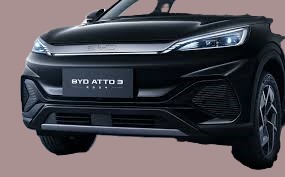
If you’re thinking about switching to an electric vehicle in Nepal, there’s a good chance the BYD Atto 3 has already caught your eye—and for good reason. It’s not just another EV. It’s a statement of style, innovation, and a greener tomorrow.
Whether you’re a daily commuter, a weekend road-tripper, or someone looking to cut down on fuel costs, the Atto 3 offers something that clicks with everyone.
🌟 First Impressions – Design That Turns Heads
From the moment you lay eyes on the BYD Atto 3, you know it’s something special. It carries a futuristic charm with its flowing lines, bold front grille, and LED lighting. The crossover SUV stance gives it road presence, but it’s not overly bulky—just the perfect balance between sporty and sleek.
Step inside, and the cabin greets you with an open, airy layout. The rotating infotainment display is not just a gimmick—it’s a practical and fun touch. The panoramic sunroof, layered dashboard, and soft ambient lighting make every drive feel premium.
🔋 Power Meets Practicality – Performance & Battery Life
Under the hood (or rather, beneath the floor), the Atto 3 is all-electric. You get two battery variants:
🔹 49.92 kWh (Advanced Variant)
🔹 60.48 kWh (Superior Variant)
The larger battery gives you up to 420 km of real-world range, which means less time charging and more time driving. Whether you’re navigating Kathmandu’s busy lanes or taking a weekend trip to Pokhara, this car won’t leave you stranded with range anxiety.
Charging is pretty straightforward too:
🚀 Fast Charging: 0 to 80% in around 45 minutes
🏠 Home Charging (AC): Plug it overnight and you’re good to go the next day.
🧠 Smart & Safe – Features You’ll Love
Safety is where the BYD Atto 3 truly shines. It’s scored a 5-star Euro NCAP safety rating, making it one of the safest EVs in its class. Plus, you get:
Adaptive Cruise Control
Lane-Keep Assist
Blind Spot Monitoring
Multiple Airbags
Rear Cross-Traffic Alert
On top of that, the Vehicle-to-Load (V2L) feature lets you use your car as a power bank—perfect for camping or power cuts!
💸 BYD Atto 3 On-Road Price in Nepal (May 2025)
If you’re wondering about the cost, here’s the latest pricing:
🔹 Advanced Variant – NPR 56.90 Lakhs
🔹 Superior Variant – NPR 67.80 Lakhs
The price includes an 8-year or 160,000 km warranty on the battery and motor, which adds solid peace of mind.
👍 What We Love (and What Could Be Better)
Why You’ll Love It:
✅ Excellent range for Nepal’s roads ✅ Spacious, futuristic interior ✅ Smooth, silent, and fun to drive ✅ Loaded with safety features ✅ Strong value-for-money proposition
Room for Improvement:
❌ DC fast charging could be quicker ❌ Service availability is still growing outside major cities
🏁 Final Thoughts – Is the BYD Atto 3 Worth It?
Absolutely. The BYD Atto 3 isn’t just a car—it’s a shift toward a smarter, cleaner, and more exciting way to drive. It’s stylish, reliable, and efficient, and it makes the transition to electric feel completely natural.
If you’ve been on the fence about getting an EV, the Atto 3 might just be the perfect place to start your journey. It brings together all the right ingredients—looks, performance, safety, and value.
The Indian automobile market is buzzing with excitement as Tata Motors has officially launched the much-anticipated Tata Punch EV 2025. This compact electric SUV is not just another car—it’s a bold statement, a reflection of India’s rapid shift towards sustainable mobility. For those waiting for an affordable, reliable, and stylish EV with a punch (pun intended), the wait is finally over.
🌿 A Green Future on Four Wheels
With climate change becoming an urgent global concern, consumers are actively seeking greener alternatives. The Tata Punch EV answers that call. Built on Tata’s Gen-2 EV architecture, it promises to deliver zero emissions without compromising performance or aesthetics.
Tata Motors has already made a name for itself in the EV sector with the success of the Nexon EV and Tigor EV, and now, the Punch EV continues that legacy. Priced competitively between ₹11 lakh to ₹15.5 lakh (ex-showroom), it targets middle-class Indian families aspiring for an eco-friendly lifestyle.
🔋 Battery, Range & Charging – No More Range Anxiety!
Let’s talk about what really matters in an EV—battery and range.
The Tata Punch EV 2025 is available in two battery variants:
Standard: 25 kWh battery with a claimed range of around 315 km.
Long Range: 35 kWh battery offering up to 421 km on a single charge.
Whether it’s your daily office commute or a weekend getaway, the Punch EV ensures you never have to worry about range anxiety.
Charging options are equally versatile:
7.2 kW fast AC charging
DC fast charging (0 to 80% in just 56 minutes)
🚙 Design That Turns Heads
At first glance, the Tata Punch EV radiates confidence. It retains the bold and muscular stance of the petrol Punch but adds futuristic elements like:
A closed-off grille with EV-blue accents
Signature DRLs and sleek projector headlamps
Aerodynamic alloy wheels
The design is not just about style—it’s a clever mix of form and function. The EV-specific front end improves airflow and enhances battery cooling, while the raised stance offers excellent ground clearance for Indian roads.
🛋️ Interiors: Tech Meets Comfort
Step inside, and the Tata Punch EV welcomes you with a futuristic cabin loaded with features:
10.25-inch floating infotainment touchscreen
Digital instrument cluster
Premium leatherette seats
Wireless Android Auto & Apple CarPlay
Arcade.ev app suite with in-car games and entertainment
Tata has focused on passenger comfort with spacious seating, ample boot space, and automatic climate control—ensuring every journey feels first class.
🛡️ Safety and Smart Features
Tata’s commitment to safety continues with the Punch EV. It comes equipped with:
6 Airbags
ESC (Electronic Stability Control)
Hill Hold Assist
360-degree camera
Blind Spot Monitoring
These features not only provide peace of mind but also make the Punch EV ideal for new drivers and families.
🌍 Built for India, Loved by Everyone
What sets the Punch EV apart is how well it understands Indian roads and consumers. It’s compact enough for city traffic, robust enough for bad roads, and efficient enough for long drives. The vehicle supports Vehicle-to-Vehicle (V2V) and Vehicle-to-Load (V2L) charging—making it a potential power source during emergencies or travel.
It’s not just a car—it’s a movement towards clean, intelligent transportation for everyone.
📣 Final Thoughts: Is It Worth It?
Absolutely. The Tata Punch EV 2025 is a power-packed electric SUV that balances affordability, innovation, and emotion. It brings the EV dream closer to the average Indian without compromising on performance or safety.
As India pushes for 30% EV adoption by 2030, models like the Punch EV are not just filling a market gap—they’re paving the way for a cleaner, smarter future.
So, if you’ve been on the fence about buying an electric vehicle, this might just be the perfect time and the perfect car to start your EV journey.
Electric vehicles (EVs) are transforming the way we think about mobility, and BYD (Build Your Dreams) is at the forefront of this revolution. As one of the world’s leading EV manufacturers, BYD offers a diverse lineup of electric cars designed for performance, safety, and sustainability. If you’re curious about their popular models, pricing, and what makes them stand out, this guide is for you.
Who is BYD?
BYD, founded in 1995 in Shenzhen, China, started as a battery maker and quickly grew into one of the largest electric vehicle manufacturers globally. Known for its advanced battery technology, particularly the innovative Blade Battery, BYD designs and produces everything from compact hatchbacks to luxury SUVs, electric buses, and commercial vehicles.
BYD’s Popular EV Models & Prices (2025)
Here’s a look at some of BYD’s top electric vehicles, their approximate price ranges in US dollars (USD) and Nepalese rupees (NPR), along with their key features and specifications.
1. BYD Atto 3 (Also called Yuan Plus)
Price in USD: $16,000 – $20,000
Price in NPR: Approximately NPR 2,030,000 – 2,540,000
Type: Compact Electric SUV
Range: Around 420-480 km (depending on variant)
Battery: 60.5 kWh Blade Battery
Charging: Fast charging from 30% to 80% in under 30 minutes
Features: Rotating touchscreen infotainment, advanced driver-assistance systems (ADAS), spacious cabin
Pros:
Excellent range for its price
Modern design with advanced tech
Comfortable interior space
Cons:
Limited availability in some markets
Rear visibility could be better
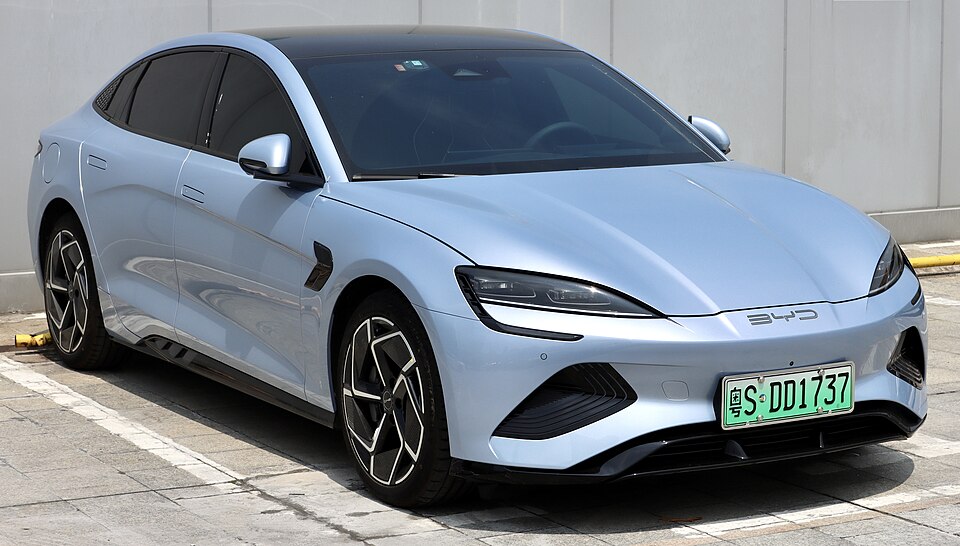
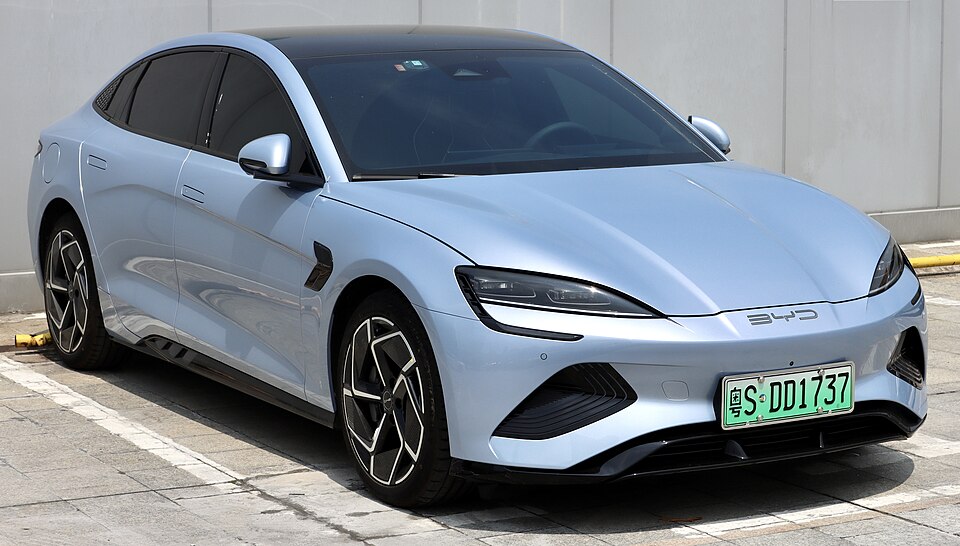
2. BYD Seal
Price in USD: $25,000 – $30,000
Price in NPR: Approximately NPR 3,175,000 – 3,810,000
Type: Electric Sedan
Range: Up to 700 km (CLTC cycle)
Battery: Blade Battery with advanced thermal management
Performance: Up to 530 hp with dual motor AWD variant
Very high price, accessible to only a niche market
Limited availability outside China
Why Choose BYD EVs?
Advanced Battery Technology
BYD’s proprietary Blade Battery is a standout feature. It’s a lithium iron phosphate battery designed for safety, durability, and efficiency. The blade design enhances thermal stability, reducing fire risks, and extends battery lifespan — a crucial factor for electric vehicles.
Vertical Integration
BYD controls its entire supply chain — from battery manufacturing to motor production and software development. This vertical integration allows better quality control, cost management, and faster innovation compared to competitors relying on external suppliers.
Sustainability Commitment
BYD is committed to environmental responsibility, not only by manufacturing EVs but also by promoting renewable energy solutions such as solar power and energy storage systems. Their vehicles contribute significantly to reducing greenhouse gas emissions globally.
Common Pros & Cons of BYD Electric Vehicles
Pros:
Competitive pricing with good value for money
Strong focus on battery safety and longevity
Wide model range from budget to luxury EVs
Growing international presence
Environmentally friendly manufacturing practices
Cons:
Brand recognition outside Asia is still developing
Some models have limited availability in Western markets
Charging infrastructure varies by region
Conclusion
BYD is rapidly establishing itself as a global EV powerhouse by combining innovative technology, attractive pricing, and a strong sustainability ethos. Whether you’re looking for an affordable city car like the Dolphin, a versatile SUV like the Atto 3, or a high-performance sedan like the Seal, BYD offers something for every type of driver.
For Nepalese buyers, while pricing may be influenced by import duties, BYD’s competitive pricing and expanding international footprint make it an exciting option as the country moves toward greener transportation solutions.
In the rapidly evolving landscape of electric vehicles (EVs), BYD (Build Your Dreams) has emerged as a formidable player not just in China, but on the global stage. From pioneering battery technology to rolling out innovative electric sedans, SUVs, and buses, BYD has firmly positioned itself as a leader in green transportation. This article explores the rise of BYD in the EV sector, its cutting-edge technologies, top-selling models, and its global impact in the journey towards a sustainable future.
The Rise of BYD: From Batteries to Global EV Leader
Founded in 1995 in Shenzhen, China, BYD initially focused on rechargeable batteries for consumer electronics. By the early 2000s, the company ventured into the automotive industry, and in 2008, it launched its first plug-in hybrid, the F3DM. This marked the beginning of its ambitious move toward electrification.
What sets BYD apart is its vertical integration strategy—the company designs and manufactures its own batteries, semiconductors, electric motors, and control systems. This gives BYD better cost control, efficiency, and the ability to rapidly innovate.
Innovative Battery Technology
One of BYD’s most significant contributions to the EV sector is its Blade Battery, unveiled in 2020. This lithium iron phosphate (LFP) battery stands out for its:
Improved safety: Blade batteries are highly resistant to combustion or explosion, even in extreme conditions like nail penetration tests.
Longer lifespan: LFP chemistry typically lasts longer than conventional lithium-ion batteries.
Better thermal stability: The Blade Battery offers consistent performance in a wider range of temperatures.
Space efficiency: Its design allows more compact battery packs, increasing vehicle range and cabin space.
BYD’s Blade Battery has been integrated into many of its newer models and is seen as a game-changer in EV safety and longevity.
Top BYD EV Models in 2025
BYD offers a wide range of electric and plug-in hybrid vehicles under several sub-brands like Dynasty, Ocean, and the luxury-focused Yangwang. Here are some of their most popular models:
1. BYD Atto 3
A compact electric SUV, the Atto 3 (known as Yuan Plus in China) is designed for global markets and is already available in Europe, India, Australia, and Southeast Asia. It offers:
420–480 km range (depending on the variant)
A 60.5 kWh Blade Battery
Intelligent infotainment system with a rotating touchscreen
Fast charging (30% to 80% in under 30 minutes)
Its sporty design, competitive price, and practical range have made it a favorite among urban drivers.
2. BYD Seal
Targeted as a direct competitor to the Tesla Model 3, the BYD Seal is a stylish electric sedan with advanced features:
Dual-motor AWD version with up to 530 hp
700+ km range (CLTC)
0–100 km/h in just 3.8 seconds (for the performance variant)
DiSus-C intelligent damping body control system
The Seal showcases BYD’s commitment to blending performance, design, and technology.
3. BYD Dolphin
This is a budget-friendly hatchback aimed at younger, city-based users. It’s praised for:
Its compact design and bright color options
Around 400 km range
Practical interior layout and tech features
4. Yangwang U8
The ultra-luxury Yangwang U8 SUV is BYD’s answer to high-end electric mobility. It’s an off-road-capable, high-performance EV with:
Quad-motor setup for precise control
Water wading capabilities and even 360-degree tank turns
A hefty price tag aimed at affluent consumers
Global Expansion: Making Waves Beyond China
BYD is no longer confined to the Chinese domestic market. In 2022, it stopped manufacturing internal combustion engine (ICE) vehicles and went fully electric (including hybrids). This strategic move highlighted its commitment to zero-emission mobility.
Key Markets:
Europe: BYD has entered markets like Germany, Norway, and the UK, offering models such as the Atto 3, Dolphin, and Seal. It’s also investing in European EV infrastructure and partnerships.
India: BYD entered the Indian passenger EV market with the e6 MPV and later the Atto 3, targeting fleet and premium users.
Southeast Asia & Latin America: Markets like Thailand, Brazil, and Colombia have welcomed BYD’s electric buses and cars with open arms.
United States: Though currently more focused on commercial EVs like electric buses and trucks, BYD is expanding its presence through strategic collaborations.
Sustainability and Environmental Commitment
BYD isn’t just building cars—it’s shaping a greener future. The company is deeply involved in renewable energy solutions, including:
Solar panels
Energy storage systems
Monorail transit systems (SkyRail)
This integrated approach means BYD contributes to a clean energy ecosystem that covers power generation, storage, and usage.
Their EVs alone are estimated to have reduced millions of tons of CO₂ emissions globally. BYD also emphasizes recyclable components, eco-friendly manufacturing processes, and reduced water and energy consumption in its plants.
EVs Beyond Cars: Buses, Trucks, and Rail
BYD is a global leader in electric buses, operating in over 50 countries. Its e-buses are especially popular in the UK, USA, and Latin America. The company’s electric trucks are also gaining traction in logistics and delivery sectors.
Another remarkable innovation is the BYD SkyRail—a monorail solution aimed at solving urban congestion in developing megacities. Cities like São Paulo and Bangkok have expressed interest in these solutions.
Challenges and the Road Ahead
Despite its rapid rise, BYD faces several challenges:
Global competition: Tesla, Volkswagen, and other EV players are also expanding aggressively.
Brand recognition: Outside of China, BYD still needs to establish a stronger brand presence.
Geopolitical hurdles: Trade restrictions and tariffs could slow down expansion in certain countries.
However, BYD’s consistent innovation, vertical integration, and sustainability focus give it a significant edge. With plans to set up local assembly lines and battery factories in Europe and other regions, the company is preparing for long-term global dominance.
Conclusion: A True EV Powerhouse
BYD’s journey from a battery manufacturer to a world-renowned EV brand is nothing short of extraordinary. With industry-leading battery technology, a diverse EV portfolio, and strong sustainability principles, BYD is shaping the future of mobility—one electric mile at a time.
Whether you’re a consumer looking for an efficient EV, a policymaker seeking green transit solutions, or a city planner envisioning smart infrastructure, BYD has something transformative to offer. In a world racing towards net-zero emissions, BYD is not just participating in the revolution—it’s leading it.
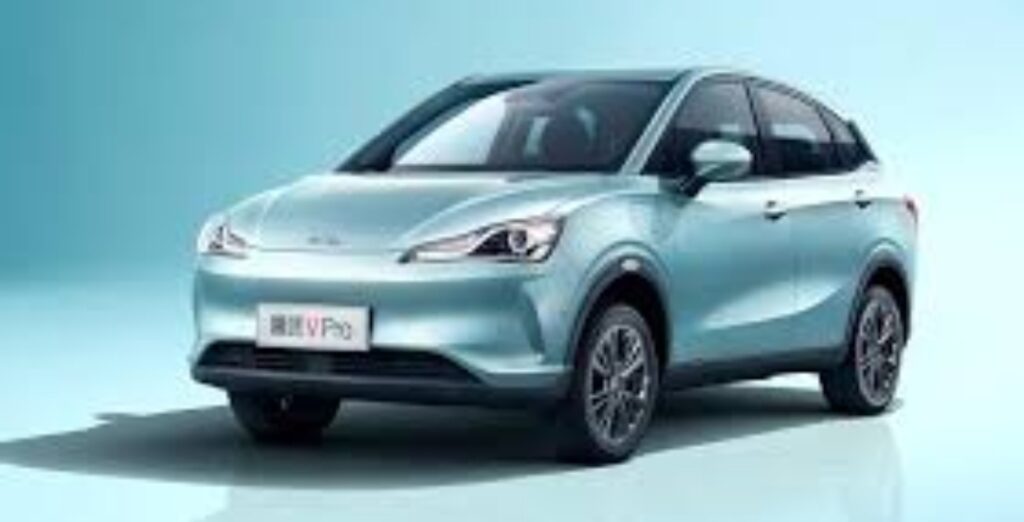
With the growing demand for sustainable mobility and electric vehicles in India, the entry of the Neta V electric car marks a significant milestone. Developed by the Chinese automaker Hozon Auto and brought to India by Enertech Motors, the Neta V is expected to become a game-changer in the affordable EV segment. Here’s everything you need to know about the Neta V, including its features, expected price, and market positioning.
Overview of the Neta V
The Neta V is a compact electric SUV designed to appeal to budget-conscious urban buyers. It first debuted in China in 2020 under the Hozon Auto brand and quickly gained popularity due to its sleek design, practical features, and low operating costs. Now, with India shifting focus towards EV adoption, Neta V arrives at a time when the demand for reliable and affordable electric cars is surging.
Key Specifications
Battery Pack: 38.5 kWh lithium-ion battery
Range: Up to 401 km (as per NEDC cycle; expect around 300 km in real-world conditions)
Motor Output: 70 kW (95 hp), with 150 Nm of torque
Top Speed: Approximately 120 km/h
Charging Time: Around 8 hours on a standard AC charger; fast charging supported
Drive Type: Front-Wheel Drive (FWD)
Dimensions: Length – 4,070 mm | Width – 1,690 mm | Height – 1,540 mm
Boot Space: 335 liters
Interior and Features
Despite its entry-level pricing, the Neta V does not compromise on interior comfort or tech features. The cabin offers a modern look with:
A large 14.6-inch touchscreen infotainment system
Digital driver display
AI-based voice assistant
Keyless entry and start
Climate control
Synthetic leather seats
Rear camera and parking sensors
It’s also equipped with connected car technology and over-the-air (OTA) updates.
Expected Price in India
Although the official price is yet to be announced, the expected price range is between ₹10 lakh to ₹12 lakh (ex-showroom). This places it well within reach for buyers considering EVs like the Tata Tiago EV or MG Comet EV. If Enertech Motors manages local assembly or manufacturing in the future, the cost could reduce further.
Safety Features
Neta V comes with basic safety features including:
Dual front airbags
ABS with EBD
Rear parking sensors
Electronic Stability Control (ESC)
Tyre Pressure Monitoring System (TPMS)
These features make it a well-rounded car for city commuters prioritizing both safety and sustainability.
Competition in the Market
In India’s budget EV segment, the Neta V will compete directly with:
Tata Tiago EV
MG Comet EV
Citroen eC3
Tata Punch EV (entry variant)
Its unique mix of styling, range, and pricing could make it an attractive option for first-time EV buyers.
Launch and Availability
As of now, Enertech Motors has confirmed plans to assemble the Neta V in India and has showcased the vehicle at various expos in 2024. The commercial launch is expected by mid to late 2025, with bookings likely to open soon after the official announcement.
Final Thoughts
The Neta V brings a refreshing new option to India’s EV scene — offering an impressive blend of range, features, and affordability. If priced competitively and backed by a strong service network, it has the potential to accelerate EV adoption in the country, especially among young urban drivers and environmentally conscious families.
As the Indian EV market continues to evolve, the Neta V could well be the stepping stone for many towards a cleaner, greener future on wheels.