SRL
“Nepal Oil Corporation: Recent Developments and Price Updates”

As of today, February 13, 2025, there are no new updates regarding the Nepal Oil Corporation (NOC). The latest significant development took place on October 3, 2024, when NOC signed an agreement with the Indian Oil Corporation to construct two new pipeline projects. One pipeline, stretching 50 kilometers, will connect Siliguri in India to Jhapa in Nepal, while the other will extend 62 kilometers from Amlekhgunj to Lothar in Chitwan. This initiative aims to improve energy security and streamline petroleum supply, especially in Nepal’s hilly regions.
Additionally, on October 31, 2024, NOC announced a reduction in diesel and kerosene prices by Re1 per liter, setting the new price at Rs150 per liter in Kathmandu, Pokhara, and Dipayal. However, the prices of petrol, liquefied petroleum gas (LPG), and aviation fuel remained unchanged.
Currently, there have been no further announcements or updates from NOC.
Petrol Prices in Biratnagar: Latest Updates and Key Factors Impacting Costs
Petrol is an essential fuel for Nepal’s transportation sector, powering vehicles across the country. The Nepal Oil Corporation (NOC) manages petrol prices, adjusting them based on global market trends and supply rates from the Indian Oil Corporation, Nepal’s primary fuel supplier.
Current Petrol Prices in Biratnagar
As of February 10, 2025, the price of petrol in Nepal is NPR 175.00 per liter. However, rates may differ slightly in Biratnagar due to transportation and distribution costs. For the most accurate pricing, checking with local fuel stations or the official NOC website is recommended.
Recent Price Revisions
In January 2025, NOC raised petrol prices by NPR 2 per liter, setting the rate at NPR 173 per liter in Kathmandu. Petrol prices in Nepal frequently fluctuate due to various external factors, including global oil market trends.
Key Factors Influencing Petrol Prices in Nepal
Several critical elements impact petrol pricing:
- Global Crude Oil Prices: The cost of crude oil in the international market directly affects petrol prices in Nepal.
- Exchange Rate Fluctuations: The value of the Nepalese Rupee against the US Dollar influences fuel import costs.
- Transportation and Logistics Expenses: The cost of transporting fuel from depots to different regions, including Biratnagar, affects the final retail price.
- Government Taxes and Policies: Duties, taxes, and subsidies set by the government significantly impact fuel prices.
Conclusion
Petrol continues to be a crucial resource in Nepal, especially in cities like Biratnagar. Staying updated with the latest price changes through official sources helps individuals and businesses manage fuel expenses effectively.
Diesel Prices in Biratnagar: Current Rates and Key Influencing Factors
Diesel fuel plays a vital role in Nepal’s transportation, agriculture, and industrial sectors. The Nepal Oil Corporation (NOC) regulates diesel prices, adjusting them based on international market trends and supply rates from the Indian Oil Corporation.
Current Diesel Prices in Biratnagar
As of February 10, 2025, the diesel price in Nepal stands at NPR 160.00 per liter. However, prices may vary slightly across different regions due to transportation costs and local distribution factors. For the latest rates in Biratnagar, checking with local fuel stations or the official NOC website is recommended.
Recent Price Changes
In January 2025, NOC raised diesel prices by NPR 3 per liter, setting the rate at NPR 156 per liter in Kathmandu. Fuel prices in Nepal fluctuate based on global oil prices, exchange rates, and supply costs.
Factors Affecting Diesel Prices in Nepal
Several key factors influence the cost of diesel:
- Global Oil Prices: Changes in international crude oil prices directly impact diesel rates in Nepal.
- Exchange Rate Fluctuations: The value of the Nepalese Rupee against the US Dollar affects fuel import costs.
- Transportation and Distribution Costs: Expenses related to moving fuel from depots to various regions, including Biratnagar, play a role in price determination.
- Government Taxes and Policies: Taxes and potential subsidies imposed by the government can significantly influence fuel prices.
Conclusion
Diesel remains an essential energy source in Nepal, particularly in cities like Biratnagar. Staying updated with price changes through official sources helps businesses and individuals manage their fuel expenses effectively.
Digitization disrupts Nepal’s handmade paper industry.

The Impact of Digitization on Nepal’s Handmade Paper Industry
Hari Kumar Magar, a handmade paper entrepreneur from Banepa Municipality, had to shut down his business due to declining demand. His factory has remained closed for over a year and a half, reflecting the broader challenges facing Nepal’s handmade paper industry.
Traditionally used by government offices for record-keeping, handmade paper is struggling to survive amid the rise of digital documentation. Many small paper factories in Kavrepalanchok, once thriving with significant investments, have now shut down.
Originally from Sindhuli, Magar established Kanchan Nepali Paper Factory 14 years ago, aiming to create a successful business. However, with demand dropping, covering production costs—including taxes, rent, and salaries—became unfeasible.
“Even after the pandemic, when other businesses started recovering, the handmade paper industry couldn’t bounce back. Eventually, I had no choice but to close down,” Magar said. He had invested Rs2.5 million in his factory but suffered losses amounting to Rs1.5 million.
Purushottam Painju, owner of Friendship Paper Industry in Khopasi, Panauti, has been in the business for two decades. Despite early success, his enterprise now faces similar struggles.
“Dealers in Kathmandu say foreign demand has dropped, and orders have declined,” Painju said. His factory’s production has reduced from 600 kori (one kori equals 20 sheets) to 500, with 200 kori remaining unsold due to low demand.
Lokta paper is known for its durability and resistance to insects and mildew. According to the UN’s Food and Agriculture Organization (FAO), the government primarily used it for official record-keeping.
Handmade paper production in Nepal dates back to at least the 12th century, particularly in rural hill districts. Baglung was historically known for producing high-quality paper.
However, by the 1930s, production declined due to imports from Tibet. By the 1960s, competition from machine-made Indian paper further weakened the industry, leaving only a few families in Baglung and Parbat with knowledge of traditional paper-making techniques.
The industry saw a revival in the 1970s, fueled by growing tourism. By the decade’s end, new markets emerged, and international organizations like UNICEF and the Asian Development Bank (ADB) initiated projects to support lokta paper production, including the establishment of Bhaktapur Craft Printers in the Kathmandu Valley.
Significant industrial developments took place in 1985, when the introduction of Japanese technologies improved efficiency while retaining traditional craftsmanship. Japan has a longstanding tradition of making handmade paper from daphne tree bark fibers, and when this method was introduced in Nepal, sustainability became a key focus, including the recycling of lokta paper scraps.
The Japan International Cooperation Agency (JICA) collaborated with the Nepalese government to train local entrepreneurs in Japanese techniques. Around the same time, General Paper Industries became Nepal’s first major private handmade paper company, pioneering these advancements.
According to Mahaguthi Craft with Conscience, a Fair Trade Organization that markets Nepali crafts, handmade paper is produced from the bark of Daphne cannabina and Daphne papyracea (lokta), found at altitudes of 2,000–2,700 meters. The raw material is sourced from several hill districts, including Dolakha.
Harvested every two to three years, the bark is cleaned, boiled, beaten into pulp, and dried in wooden frames under the sun to create sheets.
Tibetan monks have historically used this paper for manuscripts and sacred texts. However, with the rise of digitization, government orders have declined significantly, dealing a major blow to the industry.
Additionally, sourcing raw materials from Dolakha remains expensive due to high processing and labor costs. As a result, a large portion of the handmade paper produced never reaches the market, pushing businesses closer to closure.
Painju, like other producers, is uncertain about the future. He plans to scale down production in response to market demand but is unsure how long he can sustain operations.
While the exact number of Nepali handmade paper enterprises in Kavrepalanchok is unknown, the Office of Commerce and Industry records indicate that only three companies are formally registered.
Ganesh Kagaj Udyog, established in 2000, has not renewed its registration, while Ugratara Hadkeshwar Nepali Kagaj Udyog (2004) and Nepal Kagaj Udyog (2006) are no longer in contact with authorities.
“Many enterprises operated without registration, but even the officially registered ones are now on the verge of closure,” said Sitaram Pokharel, chief of the office.
Despite the versatility of Nepali handmade paper, its higher production cost compared to regular paper and the widespread shift to digital documentation have shrunk its market.
Data from the Inland Revenue Office in Kavrepalanchok shows that five Nepali paper enterprises are registered, though not all remain active.
According to the Department of Customs, Nepal exported handmade paper worth Rs335.67 million in the first six months of the current fiscal year. Major export destinations include Australia, China, France, Germany, the UAE, the UK, the US, and Japan. The paper is primarily used for greeting cards, stationery sets, notebooks, gift-wrapping paper, bags, envelopes, and photo frames.
While Nepali handmade paper remains an important part of the country’s cultural heritage, its future is uncertain as digital alternatives continue to replace traditional documentation methods.
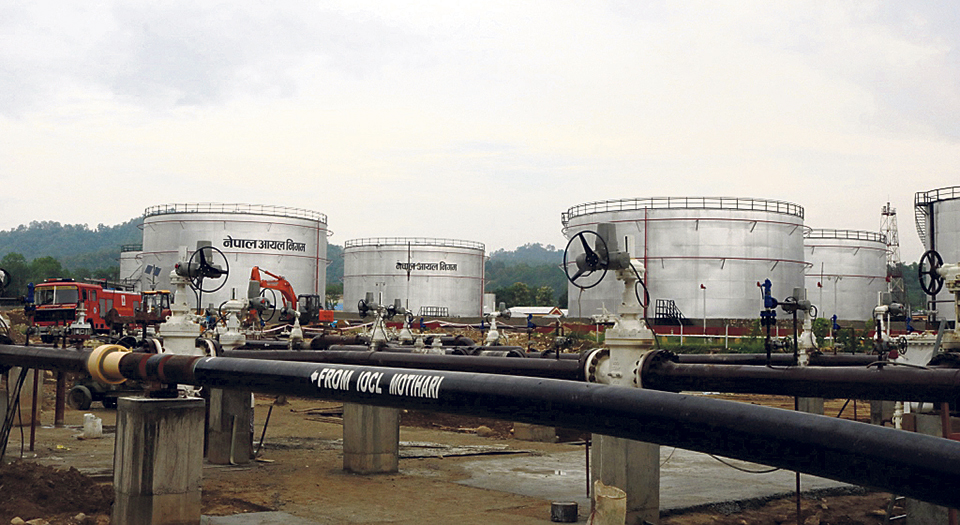
The second phase of the Motihari-Amlekhgunj Petroleum Pipeline project is advancing, with 40% of the work completed.

The second phase of the Motihari-Amlekhgunj Petroleum Pipeline project is progressing well, with around 40 percent of the work completed, according to Binit Mani Upadhyay, head of the Madhesh Regional Office of NOC, Amlekhganj Bara.
As part of this phase, the Indian Oil Corporation (IOC) is building two petrol tanks with a capacity of 4,000 kiloliters each, along with two transmix tanks of 250 kiloliters each. Additionally, 24 fully automated loading stations for petrol transportation, pump houses, refillers, and laboratories are being developed at the Amlekhgunj depot in Bara, Upadhyaya stated.
He also highlighted advancements in upgrading the fire-fighting system, implementing the OWS system for oil-water separation, and constructing the PMCC room. The NOC Madhesh Regional Office has assigned Likhita Infrastructure Pvt Ltd to complete the infrastructure by the end of 2023. Funding for one petrol tank will come from the NOC, while the IOC will finance the other.
NEPAL OIL CORPORATION

Nepal Oil Corporation (NOC)
Nepal Oil Corporation (NOC) is a government-owned company responsible for importing, storing, and distributing petroleum products in Nepal. No private companies are allowed to import petrol or diesel. NOC was established in 1970 under Nepal’s “Company Act, 2021 (1964).” The government owns 99.46% of the company, while the rest is shared by four other state-owned organizations: Rastriya Beema Sansthan, National Trading Ltd., Nepal Bank Ltd., and Rastriya Banijya Bank.History
NOC started small, storing oil in just two drums under the leadership of the late Mr. Subarna Bikram Thapa. Thanks to his efforts, the company now has over 30,000 kilolitres (kL) of storage facilities across Nepal. Since Nepal is a landlocked country, it relies entirely on imports to meet its fuel needs. Most petroleum products are supplied through a long-term agreement with Indian Oil Corporation (IOC), a major oil company in India.Operations and Infrastructure
NOC is based in Kathmandu and operates through seven provincial offices, three branch offices, two fuel depots, one petrol pump, and ten aviation fuel depots. It has a total storage capacity of 71,558 kilolitres (kL) and employs 872 permanent staff members along with contract workers. The company is managed by a board of directors, mostly government officials, along with one expert chosen by the government.Motihari-Amlekhgunj Oil Pipeline
The Motihari-Amlekhgunj pipeline is a 69-kilometre (42.9-mile) pipeline that brings oil from Motihari in India to Amlekhgunj in Nepal. It has made oil transportation faster, safer, and more efficient. This is the first cross-border pipeline in South Asia and is operated by Indian Oil Corporation. It was officially inaugurated on September 10, 2019, by the Prime Ministers of India and Nepal.Tanker 6956

Tanker 6956: Ensuring Reliable Petroleum Supply from Barauni to Biratnagar
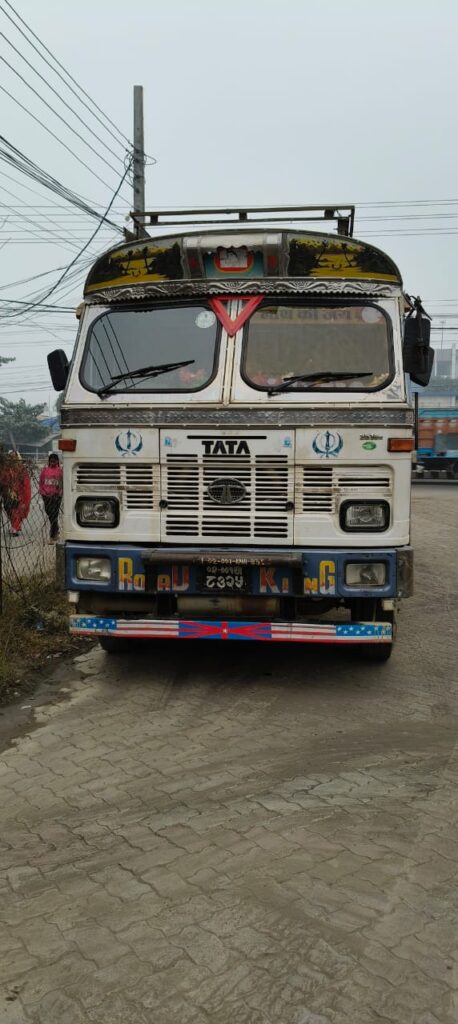
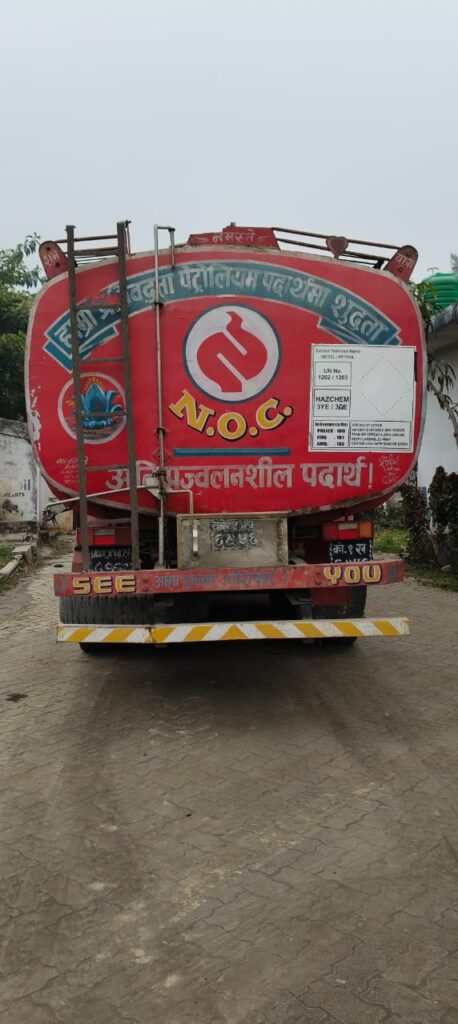
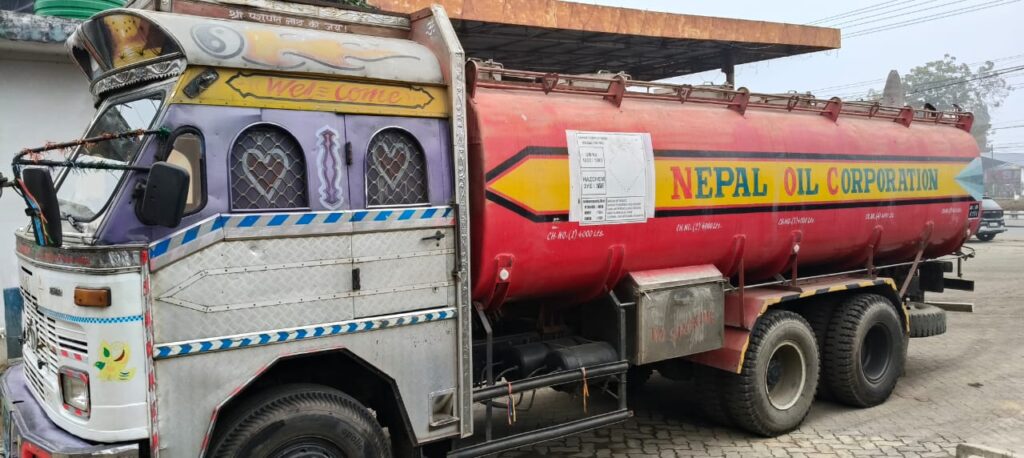
At Sharma Roadlines Pvt Ltd, we take pride in our efficient and safe transportation of petroleum products. Our tanker, 6956, plays a crucial role in ensuring a steady supply of petrol from Barauni Refinery in India to Biratnagar, Nepal, for the Nepal Oil Corporation.
A Vital Link in Nepal’s Energy Supply Chain
Tanker 6956 is an essential part of the petroleum logistics network, facilitating uninterrupted fuel delivery to meet the growing energy demands of Nepal. The journey from Barauni to Biratnagar requires strict adherence to safety standards and compliance with international transportation regulations to ensure secure fuel transfer.
Safety & Compliance Standards
At Sharma Roadlines Pvt Ltd, we prioritize safety in all our transportation operations. Tanker 6956 is equipped with:
- Modern safety features, including anti-spill mechanisms and fire-resistant materials.
- GPS tracking for real-time monitoring and route optimization.
- Certified drivers trained in handling hazardous materials and emergency response procedures.
Efficiency & Reliability
Our logistics team ensures timely and efficient delivery of petrol, minimizing delays and maintaining a seamless supply chain. Regular vehicle maintenance and quality checks help us maintain the highest operational standards.
Commitment to Sustainability
We are dedicated to minimizing our environmental impact by adopting fuel-efficient driving practices and complying with all eco-friendly transport regulations. Our goal is to contribute to a sustainable future while delivering essential energy resources.
Conclusion
Tanker 6956 is a vital asset in our mission to supply high-quality petroleum products to Nepal Oil Corporation. At Sharma Roadlines Pvt Ltd, we remain committed to safety, reliability, and efficiency in every aspect of our transportation services.
For inquiries or further details about our fuel transportation services, feel free to