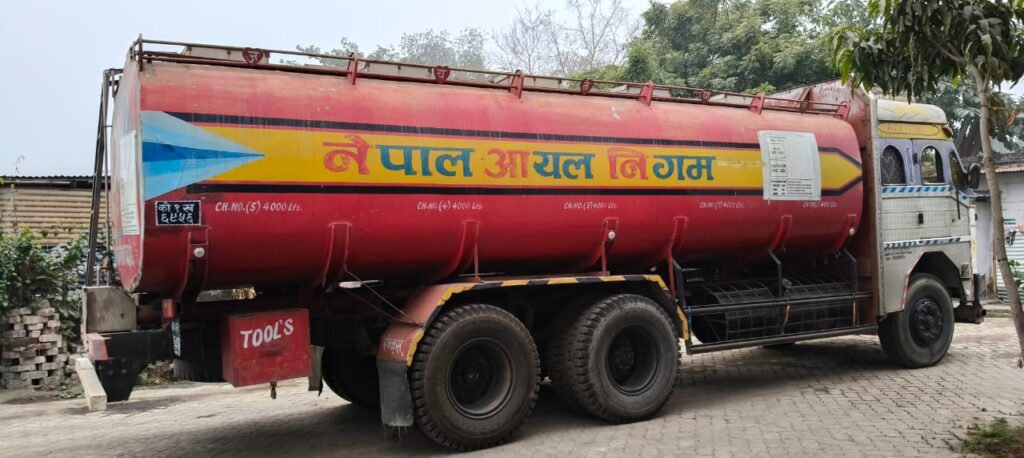
नेपाल आयल निगम (NOC) ले २०८२ साल जेठ १७ गते (२०२५ मे ३१) देखि लागू हुने गरी पेट्रोलियम पदार्थहरूको खुद्रा मूल्य समायोजन गरेको छ। भारतीय आयल कर्पोरेशन लिमिटेड (IOCL) बाट प्राप्त नयाँ खरिद दरका आधारमा यो मूल्य समायोजन गरिएको हो।
🔄 IOCL बाट प्राप्त नयाँ खरिद दरहरू
जेठ १७ गते प्राप्त विवरण अनुसार, पेट्रोलको नयाँ खरिद मूल्य प्रतिलिटर रु. १२१.९१ र डिजेलको रु. ११०.९६ कायम गरिएको छ। अन्तर्राष्ट्रिय बजार मूल्यमा आएको कमीका कारण निगमले उपभोक्तालाई राहत दिने गरी खुद्रा मूल्य घटाएको हो।
२०२५ जुन १ मा प्राप्त अन्तर्राष्ट्रिय दरअनुसार, काठमाडौंसम्मको लागत मूल्य पेट्रोलका लागि रु. २१० र डिजेलका लागि रु. १९२ रहेको छ, जुन अघिल्लो मूल्यभन्दा प्रतिलिटर रु. २ कम हो। यसअनुसार, मूल्यलाई ब्रेक इभेन पोइन्ट नजिक ल्याउँदै समायोजन गरिएको हो।
अन्तर्राष्ट्रिय हवाई इन्धन तथा एलपी ग्यासको मूल्य पनि संशोधित गरिएको छ।
🛢️ नयाँ खुद्रा बिक्री मूल्यहरू (लागू मिति: २०८२ जेठ १८ गते राति १२:०१ बजेबाट)
क्र.सं.
इन्धनको प्रकार
अघिल्लो मूल्य (रु./लिटर)
नयाँ मूल्य (रु./लिटर)
फरक
१
पेट्रोल
रु. १७४.००
रु. १७२.००
-२.००
२
डिजेल / मट्टीतेल
रु. १६३.००
रु. १६१.००
-२.००
३
हवाई इन्धन (आन्तरिक)
रु. १५१.००
रु. १५१.००
यथावत
४
हवाई इन्धन (अन्तर्राष्ट्रिय)
USD ०.९५
USD ०.९३
-०.०२
📍 क्षेत्रअनुसार वितरण वर्ग
पहिलो वर्ग: काठमाडौं, पोखरा, दिपायल दोस्रो वर्ग: बिराटनगर, जनकपुर, अमलेखगञ्ज, भैरहवा, नेपालगञ्ज, धनगढी, सुर्खेत लगायतका अन्य स्थानहरू।
परिवहन लागतका आधारमा स्थान अनुसार मूल्यमा थोरै फरक पर्न सक्छ।
📌 निष्कर्ष
नेपाल आयल निगमले अन्तर्राष्ट्रिय बजारको मूल्य घटबढलाई ध्यानमा राख्दै उपभोक्तालाई सहज मूल्यमा इन्धन उपलब्ध गराउने उद्देश्यले खुद्रा मूल्य समायोजन गरेको हो। पेट्रोल र डिजेल दुबैमा प्रतिलिटर रु. २ को कमी आउँदा उपभोक्ताले राहत महसुस गर्नेछन्।
पेट्रोलियम सम्बन्धी थप जानकारी र नयाँ अपडेटहरूका लागि NOC का आधिकारिक सूचना स्रोतहरू हेर्दै गर्नुहोस्।
Nepal Oil Corporation (NOC) has introduced new fuel prices starting Jestha 17, 2082 (May 31, 2025), following the updated purchase rates received from Indian Oil Corporation Limited (IOCL).
🔄 New Purchase Rates from IOCL
According to the latest import details received on Jestha 17, the new buying price of petrol is NPR 121.91 per liter and diesel is NPR 110.96 per liter. These reduced rates have allowed NOC to lower the retail prices for consumers across Nepal.
Based on the international market update dated June 1, 2025, the international rate for petrol (delivered to Kathmandu) now stands at NPR 210 per liter, while diesel is priced at NPR 192 per liter—both down by NPR 2. As a result, NOC has made changes to bring selling prices closer to the break-even point.
The prices of aviation fuel and LPG for international airlines have also been revised accordingly.
🛢️ Revised Retail Fuel Prices in Nepal (Effective from 12:01 AM, Jestha 18, 2082)
Retail prices slightly vary between locations based on transport and logistics costs.
📌 Summary
Nepal Oil Corporation’s latest fuel price adjustment reflects international price changes and aims to provide fair and transparent rates to Nepali consumers. With petrol and diesel prices dropping by NPR 2 per liter, this update brings some relief to households and businesses alike.
Stay tuned to official NOC channels for future updates and pricing information.
As Nepal celebrates its 18th Republic Day, the country is experiencing major developments across politics, economy, infrastructure, and climate. From budget announcements to royalist demonstrations, here’s a detailed roundup of today’s top stories from Nepal.
Republic Day Observed Amid Calls for Monarchy Restoration
Nepal marked the 18th anniversary of becoming a republic, transitioning from a monarchy in 2008. While the government organized official programs across the nation, thousands of royalist supporters gathered in Kathmandu, calling for the return of the monarchy.
Critics of the current democratic system argue that political instability and lack of economic progress have led many to question the effectiveness of the republic. To ensure public safety, around 6,000 security personnel were deployed throughout the capital.
Nepal Unveils Rs 1.96 Trillion Budget for FY 2025/26
Finance Minister Bishnu Prasad Paudel presented the highest-ever budget in Nepal’s history—Rs 1.96 trillion—for the fiscal year 2025/26. The government aims to boost the national GDP by 6%, with strong emphasis on infrastructure development, job creation, and inviting private investment.
While the business sector welcomed the budget’s growth-oriented vision, opposition leaders criticized the lack of clarity in execution strategies, especially given the current political uncertainty.
In trade policy news, Nepal has lifted its partial ban on imports of specific dairy items—such as whey and cheese—from India. This move is expected to stabilize local markets and improve trade ties with its southern neighbor.
A new environmental study has raised alarms over the rapid melting of glaciers in the Himalayas. Even a 2°C rise in global temperatures could result in significant glacier loss in the region, threatening water sources and ecosystems.
In response, Nepal recently hosted the Sagarmatha Sambaad, a global climate conference focused on mountain ecosystems. The dialogue encouraged nations to collaborate on environmental conservation and sustainable development, especially for climate-vulnerable countries like Nepal.
Infrastructure: Progress on Expressway, New Hospital in Karnali
The Kathmandu–Terai/Madhesh Expressway, one of Nepal’s most ambitious infrastructure projects, has achieved 37% completion. This 70-kilometer expressway, once finished, will drastically improve travel and trade between the capital and the southern plains. Authorities now expect the project to conclude by April 2027.
In the health sector, the Karnali Academy of Health Sciences announced the establishment of a 50-bed satellite hospital in Dailekh. The initiative aims to improve medical access in Nepal’s remote and underserved regions.
Nationwide Teachers’ Protest Over Job Security
Public school teachers across Nepal continued their demonstrations against the proposed School Education Bill. Teachers are demanding guaranteed job security, pay parity, and inclusion in government social security plans.
The educators argue that the new bill undermines previous agreements and weakens their employment status. At the same time, the government has introduced educational reforms, including youth startup incentives and a new policy aimed at universal basic education by 2084 BS.
Sports: Nepal’s Cricket and Kabaddi Teams Make Headlines
Nepal’s national cricket team is preparing to participate in the 2025 Scotland Tri-Nation Series, facing off against teams from Scotland and the Netherlands. This series is part of the ICC Cricket World Cup League 2 and is vital for Nepal’s qualification journey.
On the domestic front, the Nepal Kabaddi League concluded successfully with the Janakpur Knights winning the championship. The tournament featured six regional teams and aimed to promote kabaddi among youth.
Security Update: Border Incidents Raise Concerns
In a significant border security development, Indian authorities apprehended two Chinese nationals entering India illegally from Nepal through the Madhubani border. One of the detainees was reportedly in possession of over 50 videos promoting anti-India and pro-Khalistan sentiments, prompting concerns over potential cross-border propaganda.
In another case, two individuals were sentenced to 14 years of rigorous imprisonment for smuggling 60 kilograms of cannabis through the India-Nepal border. They were also fined Rs 2 lakh each.
Conclusion: Nepal’s Crossroads Between Tradition and Progress
Nepal today stands at a critical juncture—balancing its historical values with a vision for future development. As the republic completes 18 years, challenges like climate change, economic management, and political unrest persist. However, initiatives in infrastructure, healthcare, education, and international cooperation highlight the country’s resilience and its aspirations for a better tomorrow.
Electric vehicles (EVs) are transforming the way we think about mobility, and BYD (Build Your Dreams) is at the forefront of this revolution. As one of the world’s leading EV manufacturers, BYD offers a diverse lineup of electric cars designed for performance, safety, and sustainability. If you’re curious about their popular models, pricing, and what makes them stand out, this guide is for you.
Who is BYD?
BYD, founded in 1995 in Shenzhen, China, started as a battery maker and quickly grew into one of the largest electric vehicle manufacturers globally. Known for its advanced battery technology, particularly the innovative Blade Battery, BYD designs and produces everything from compact hatchbacks to luxury SUVs, electric buses, and commercial vehicles.
BYD’s Popular EV Models & Prices (2025)
Here’s a look at some of BYD’s top electric vehicles, their approximate price ranges in US dollars (USD) and Nepalese rupees (NPR), along with their key features and specifications.
1. BYD Atto 3 (Also called Yuan Plus)
Price in USD: $16,000 – $20,000
Price in NPR: Approximately NPR 2,030,000 – 2,540,000
Type: Compact Electric SUV
Range: Around 420-480 km (depending on variant)
Battery: 60.5 kWh Blade Battery
Charging: Fast charging from 30% to 80% in under 30 minutes
Features: Rotating touchscreen infotainment, advanced driver-assistance systems (ADAS), spacious cabin
Pros:
Excellent range for its price
Modern design with advanced tech
Comfortable interior space
Cons:
Limited availability in some markets
Rear visibility could be better
2. BYD Seal
Price in USD: $25,000 – $30,000
Price in NPR: Approximately NPR 3,175,000 – 3,810,000
Type: Electric Sedan
Range: Up to 700 km (CLTC cycle)
Battery: Blade Battery with advanced thermal management
Performance: Up to 530 hp with dual motor AWD variant
Very high price, accessible to only a niche market
Limited availability outside China
Why Choose BYD EVs?
Advanced Battery Technology
BYD’s proprietary Blade Battery is a standout feature. It’s a lithium iron phosphate battery designed for safety, durability, and efficiency. The blade design enhances thermal stability, reducing fire risks, and extends battery lifespan — a crucial factor for electric vehicles.
Vertical Integration
BYD controls its entire supply chain — from battery manufacturing to motor production and software development. This vertical integration allows better quality control, cost management, and faster innovation compared to competitors relying on external suppliers.
Sustainability Commitment
BYD is committed to environmental responsibility, not only by manufacturing EVs but also by promoting renewable energy solutions such as solar power and energy storage systems. Their vehicles contribute significantly to reducing greenhouse gas emissions globally.
Common Pros & Cons of BYD Electric Vehicles
Pros:
Competitive pricing with good value for money
Strong focus on battery safety and longevity
Wide model range from budget to luxury EVs
Growing international presence
Environmentally friendly manufacturing practices
Cons:
Brand recognition outside Asia is still developing
Some models have limited availability in Western markets
Charging infrastructure varies by region
Conclusion
BYD is rapidly establishing itself as a global EV powerhouse by combining innovative technology, attractive pricing, and a strong sustainability ethos. Whether you’re looking for an affordable city car like the Dolphin, a versatile SUV like the Atto 3, or a high-performance sedan like the Seal, BYD offers something for every type of driver.
For Nepalese buyers, while pricing may be influenced by import duties, BYD’s competitive pricing and expanding international footprint make it an exciting option as the country moves toward greener transportation solutions.
Petroleum products are the lifeblood of the global economy. From transportation to manufacturing, energy generation to agriculture—almost every sector depends heavily on crude oil and its derivatives. The fluctuation in international petroleum product prices doesn’t just affect oil-producing nations—it also has far-reaching consequences for developing countries like Nepal, which rely entirely on imports to meet their energy demands.
Global Trends in Petroleum Prices
International crude oil prices are influenced by a variety of factors, including:
OPEC+ production decisions
Geopolitical tensions (e.g., Russia-Ukraine conflict, Middle East instability)
Global economic outlook and demand
Natural disasters and pandemics
Exchange rate fluctuations
In 2024 and into 2025, global petroleum prices have remained volatile. Events such as tensions in the Middle East, changing production quotas by OPEC+, and fluctuating demand from major economies like China and the USA continue to impact pricing.
Why This Matters to Nepal
Nepal is a landlocked country with no domestic oil production. It imports 100% of its petroleum products, primarily through India, and is heavily dependent on the international price of crude oil. The consequences of rising petroleum prices are particularly serious for Nepal due to:
1. Inflationary Pressure
Higher global oil prices lead to increased import costs, which are passed on to consumers. This contributes to a rise in the prices of goods and services, especially transportation, food, and basic commodities, fueling inflation.
2. Rising Trade Deficit
Since petroleum imports form a large part of Nepal’s import bill, rising prices increase the country’s trade deficit. This weakens the balance of payments and puts pressure on the foreign exchange reserves.
3. Increased Transportation Costs
Nepal’s rugged terrain already makes transportation expensive. With higher fuel prices, logistics and transport costs go up, making everything from vegetables to construction materials more costly.
4. Impact on Development Projects
Government infrastructure and development projects often rely on fuel-intensive machinery and transport. An increase in petroleum prices can lead to budget overruns and delays in project implementation.
5. Energy Security Concerns
With global prices rising unpredictably, Nepal faces challenges in ensuring a stable and affordable energy supply. It increases the urgency to diversify energy sources and invest more in renewable energy.
How Can Nepal Mitigate These Effects?
While Nepal cannot control international petroleum prices, it can take several steps to reduce its vulnerability:
Diversify energy sources: Invest in hydropower, solar, and bioenergy to reduce dependency on imported petroleum.
Improve public transportation: Better infrastructure and affordable public transport can reduce individual fuel consumption.
Promote fuel efficiency: Encourage fuel-efficient vehicles and practices across industries.
International petroleum product prices will continue to remain unpredictable due to global dynamics. For a country like Nepal, the impact is profound—affecting everything from inflation and trade balances to daily life. Addressing these challenges requires long-term planning, strategic investment in alternative energy, and regional cooperation.
Kathmandu, May 3, 2025 — The Nepal Oil Corporation (NOC) has announced a fresh reduction in fuel prices, bringing relief to consumers across the country. The revised rates came into effect from midnight on May 1, 2025, following the latest shipment price update from Indian Oil Corporation, Nepal’s sole supplier of petroleum products.
Revised Fuel Prices
Under the new pricing structure, petrol prices have been cut by Rs 2 per litre, while diesel and kerosene have each seen a Rs 1 per litre reduction. Similarly, the cost of domestic aviation fuel has dropped by Rs 4 per litre, and international aviation fuel supplied at Kathmandu has been slashed by USD 29 per kiloliter.
Price Variation by Region
Fuel prices in Nepal are regionally categorized due to transportation costs and distribution logistics. Here’s a breakdown of the new prices by zone:
Kathmandu Valley, Pokhara, Dipayal:
Petrol: Rs 158 per litre
Diesel & Kerosene: Rs 145 per litre
Category A Cities (Chaarali, Biratnagar, Janakpur, Amlekhgunj, Nepalgunj, Dhangadhi, Birgunj):
Petrol: Rs 155.50 per litre
Category B Cities (Surkhet, Dang):
Petrol: Rs 157 per litre
Why the Price Drop?
These reductions are part of NOC’s routine pricing revisions, which are conducted every 15 days. The adjustments reflect changes in international oil prices and the latest import costs quoted by the Indian Oil Corporation.
With global oil prices witnessing slight downward trends in recent weeks, this cut is expected to provide financial relief to the general public and transport sector, especially as fuel remains a significant component of household and operational expenses in Nepal.
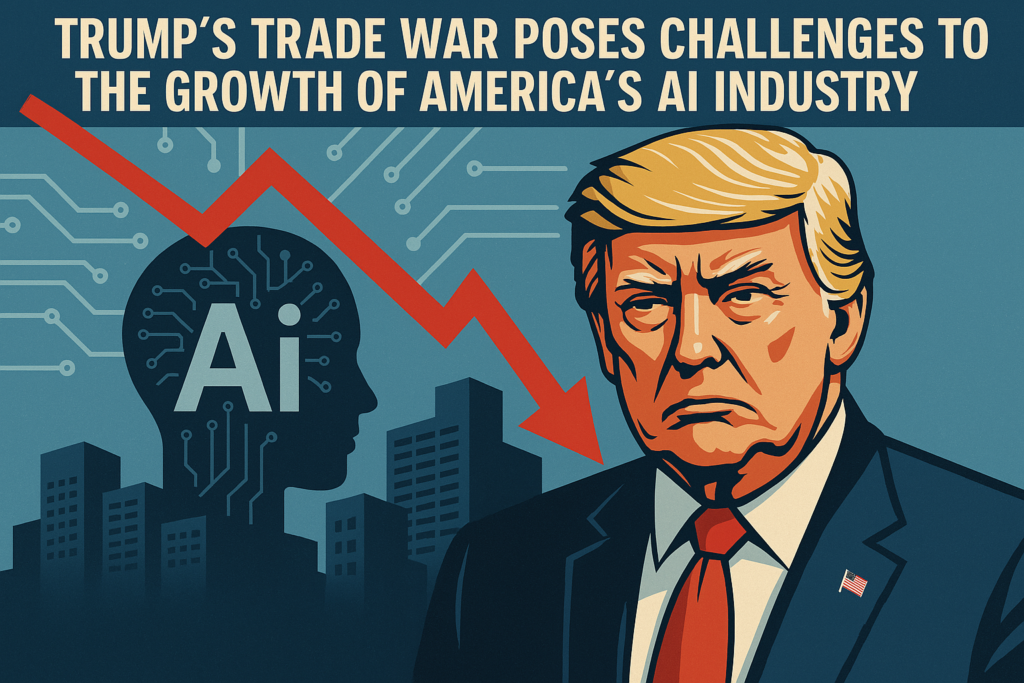
SAN FRANCISCO — While President Donald Trump has vowed to establish the U.S. as the global hub for artificial intelligence, his tough trade policies may end up slowing down the very progress he hopes to accelerate.
Industry experts and executives warn that Trump’s steep tariffs, especially on goods from China, are driving up the costs of building and operating data centers — the backbone of AI development. These data hubs, crucial for powering technologies from companies like OpenAI, Google, and Microsoft, rely on complex international supply chains for components and construction materials.
OpenAI CEO Sam Altman acknowledged the pressure in a recent interview, noting the company is urgently assessing how the rising tariffs could impact the cost of running its AI systems. “We’re working around the clock on this,” he said.
Although Trump has positioned China as America’s main competitor in AI, and argues the U.S. must maintain a lead for both economic and national security reasons, some in the tech world believe his tariff-heavy strategy could backfire. With levies now reaching 145%, some believe it may actually give China an edge in the AI race.
Josh Levi, president of the Data Center Coalition, urged the administration to carefully consider the broader effects of tariffs on critical infrastructure. “At this pivotal time for AI, it’s important we have stability and clear guidance, especially when it comes to data center components,” Levi said.
While AI software isn’t directly affected by the tariffs, the hardware needed to train and deploy these systems — such as GPUs, cooling units, backup power systems, and building materials — is. And China, despite retaliating with its own 125% tariffs on U.S. goods, remains a key supplier for much of this equipment.
Altman pointed out that even though some chips are exempt, many other vital components aren’t — and the full cost of building a data center goes far beyond just processors. “It might sound good on paper, but the reality is much more complex,” he explained after speaking at the Vanderbilt Summit on Modern Conflict and Emerging Threats.
This uncertainty is unsettling for an industry that’s otherwise charging full speed ahead. “The dominant feeling right now is confusion — it’s very hard to plan under these conditions,” said Jay Biggins, executive managing director at BLS & Co., a real estate consulting firm specializing in AI data center development.
Since OpenAI launched ChatGPT in 2022, tech companies and investors have poured billions into developing AI tools and the infrastructure needed to support them. The result is a massive wave of data center construction sweeping across the U.S., straining power grids and even prompting the revival of old coal and nuclear plants.
Google is expected to invest $75 billion in AI-related data centers this year alone, while Microsoft plans to spend $80 billion. Meanwhile, Trump, on the first full day of his second term, welcomed AI and business leaders to the White House, where they pledged up to $500 billion toward a project dubbed “Stargate” — aimed at AI data center expansion.
Don Clark, co-CEO of construction firm Clark Pacific, said the AI data center boom is unlike anything he’s seen. “It’s probably the biggest construction market I’ve encountered in my entire career,” he said.
But for some, the warning signs are clear. Andrew Ng, former head of Google’s AI division and now co-founder of DeepLearning.AI, said he’s deeply concerned about how tariffs could derail momentum. “There’s a huge push to build out energy infrastructure and data centers in the U.S. — and tariffs will absolutely raise costs,” he said.
Initially, stock prices for AI leaders took a hit following the tariff news but have since rebounded. Still, analysts like Dan Ives from Wedbush Securities predict turbulence ahead. In a note to clients, Ives estimated that up to 15% of cloud and AI projects could be delayed due to trade uncertainty.
And it’s not just about finding alternate suppliers. Even if companies look to American sources, demand is already so high that prices are soaring and delivery timelines stretch months — if not years — out. “Backlogs for essential gear like transformers and generators are already at 24 to 36 months,” Biggins noted, estimating that overall data center costs could rise 15–20%.
These challenges might even push some U.S. AI companies to consider building their infrastructure elsewhere. Ng noted that while companies typically want to keep data centers close to users for speed, AI processing is less time-sensitive. “If a model takes 10 seconds to generate an image, a few extra milliseconds in transmission don’t matter much,” he said.
Big Tech already has data centers around the world and is expanding in countries like Malaysia and Singapore. With shifting regulations and abrupt policy changes in the U.S., other regions with more predictable governance are becoming increasingly attractive.
“When rules change overnight on social media, it’s nearly impossible to plan effectively,” Ng said. “In the long run, that kind of instability makes other parts of the world look like safer bets.”
Anjila Tumbapo Subba, the captain and goalkeeper of Nepal’s national women’s football team, overcame early doubts and societal barriers to become a pioneering figure in Nepali football.
Growing up in Panchthar district of Koshi Province, Subba’s earliest memory is watching local villagers passionately play football near her home. While she admired the sport, she initially hesitated to join, feeling shy about playing in a male-dominated field. However, her love for the game eventually overpowered her reservations.
Her family initially discouraged her from pursuing football, believing it was a sport meant for boys and doubting its future prospects for her. Their perspective changed when a local club recognized her talent and invited her to join. This opportunity marked the turning point in her journey.
“I wasn’t keen on being a goalkeeper at first,” Subba admits. However, when a team needed a goalkeeper, she decided to step up. This choice ultimately shaped her career. Over time, her family moved from doubt to pride, fully supporting her ambitions.
Subba played for local and zonal teams before catching the attention of the Armed Police Force (APF) Club. The club offered her a place in Kathmandu, ensuring her education and a spot on the team. With just a single pair of Rs500 football shoes, which she repaired multiple times due to financial constraints, she set out on her journey.
In 2012, after becoming a regular member of the APF Club, her mentor, Prem Shrestha, a senior APF official, took her and her teammates to an Adidas store. Receiving football boots worth Rs10,000 was an emotional milestone for her. However, despite her passion, she had to spend two years on the bench before getting her first opportunity to play. Looking back, she values this period, as it allowed her to refine her skills and develop as a player.
Subba’s breakthrough moment arrived in 2014 when she played a crucial role in Nepal’s triumph at the AFC U-14 Regional Championship for South and Central Asia, securing a 4-0 victory against India. Later that year, she realized her dream of representing Nepal at the 2014 SAFF Women’s Championship. Wearing the national jersey filled her with immense pride.
Although she was initially a backup goalkeeper, Subba remained patient and focused on learning. Her persistence paid off in the 2016 SAFF Women’s Championship when she finally made it to the starting eleven against Sri Lanka. By the end of the tournament, she had secured her position as Nepal’s first-choice goalkeeper—a role she had long aspired to.
Since then, Subba has made 42 appearances for Nepal’s national team. In 2022, she was honored with the captain’s armband ahead of the SAFF Women’s Football Championship, leading her team with determination. Besides playing for Nepal, she also represents Sethu FC, a premier Indian football club based in Tamil Nadu.
Among her many career highlights, one of the most memorable came in 2019 during the Hero Women’s Gold Cup in India. Nepal secured a historic 2-1 victory against India, marking their first-ever win against their longtime rivals.
Subba acknowledges the challenges goalkeepers face, often receiving little credit for their contributions. “Even if we make ten saves and concede two goals, people only remember the ones we let in,” she explains, hoping for greater recognition of goalkeepers’ roles.
She also sheds light on the struggles of female footballers in Nepal, including the irregularity of games, reduced international matches since 2019, and inadequate training facilities. Despite recent improvements, such as an increase in monthly stipends for female players, Subba believes there is still significant progress to be made.
Her journey is a testament to resilience, passion, and the power of breaking stereotypes. As she continues to inspire the next generation, Anjila Tumbapo Subba remains a beacon of hope for women’s football in Nepal.
HER RECENT BIOPIC MOVIE: “ANJILA” MUST WATCH MOVIE
The movie Anjila is inspired by the true story of Anjila Tumbapo Subba, the captain and top goalkeeper of Nepal’s national women’s football team. It follows her transformation from a reserved girl to a team leader, overcoming numerous challenges along the way. Anjila plays herself in the lead role, while Dayahang Rai and Srijana Subba portray her parents. The film highlights the power of perseverance and reinforces the message that with determination, anything is possible. IMDb RATING8* POSITIVE RESPONSE BY THE PUBLIC.
The White House denies violating a judge’s order to halt the deportations of alleged Venezuelan gang members to El Salvador, a situation that, if proven otherwise, could push legal battles over presidential authority closer to a constitutional crisis.
The controversy stems from the administration’s use of the 18th-century Alien Enemies Act to expel Venezuelan migrants—a rare and contentious move that some view as executive overreach.
U.S. District Judge James Boasberg temporarily blocked the deportations to assess the implications of invoking the act. He also stated in court that any flights already in the air should return to the U.S. However, the administration announced on Sunday that 250 deportees, allegedly linked to the Tren de Aragua gang, were already in El Salvadorian custody.
White House Press Secretary Karoline Leavitt’s carefully worded response on Sunday further fueled speculation about whether the administration defied the judge’s directive.
“The Administration did not ‘refuse to comply’ with a court order. The order, which had no lawful basis, was issued after terrorist (Tren de Aragua) aliens had already been removed from U.S. territory,” Leavitt stated.
She also argued that “a single judge in a single city cannot direct the movements of an aircraft carrier full of foreign alien terrorists who were physically expelled from U.S. soil.”
Notably, Leavitt’s reference to the judge’s “written” order, along with the lack of clarity on when the migrants arrived in El Salvador, raises questions. Additionally, her use of the phrase “aircraft carrier” adds to the confusion, as the White House does not have the authority to determine the legality of court orders.
During his return to Washington from Florida on Sunday, former President Trump defended his administration’s actions but sidestepped a direct answer on whether the judge’s order had been followed.
“These were bad people. That was a bad group of, as I say, hombres,” Trump said. When pressed on whether his administration had violated court orders, he responded, “You’d have to speak to the lawyers about that.”
The timeline of Boasberg’s orders and their alignment with the deportation operation remains unclear. If the administration disregarded the directive, it could mark one of its most serious legal challenges to date and heighten concerns about presidential defiance of the rule of law.
Attorneys from the ACLU and Democracy Forward filed an overnight request asking Boasberg to seek sworn declarations clarifying whether officials complied with his orders. They are seeking details on whether flights departed after the judge’s instructions, whether planes subject to the order were in the air, and whether deported individuals were handed over to a foreign government after the temporary halt was issued.
Separately, a Boston judge is set to hear a case on Monday regarding allegations that Customs and Border Protection officials ignored an order blocking the deportation of Dr. Rasha Alawieh, a Brown University professor and U.S. visa holder. Reuters reported that she was deported to Lebanon after returning from a family visit abroad.
Trump is acting now and not waiting for the consequences
The unfolding events reflect a broader pattern.
Trump is exercising vast executive power, often acting first and leaving courts and political opponents to challenge him only after his decisions have already triggered nearly irreversible consequences.
His use of the Alien Enemies Act to accelerate deportations is particularly striking, as the law is traditionally reserved for wartime.
At the same time, a crackdown on student protests—exemplified by the arrest of a Palestinian green card holder—is being defended on the basis that his anti-Israel stance undermines U.S. foreign policy. Critics, however, see it as an effort to suppress First Amendment rights and dissent within academia, led by a White House unconstrained by constitutional limits.
Adding to the controversy, Trump abruptly shut down the taxpayer-funded international broadcaster Voice of America over the weekend, reigniting debates over whether he can unilaterally disregard spending mandated by Congress. This move followed his chilling statement on Friday that media outlets not aligned with his MAGA agenda are “corrupt and illegal.”
Many of Trump’s supporters elected him to dismantle institutions they see as disconnected from their values, culture, and economic interests. Polls suggest that among his base, these aggressive actions remain widely popular.
His strategy is to act swiftly, capitalizing on the fact that checks on presidential power are often applied only in hindsight. By the time legal challenges emerge, the damage is done—just as an agency dismantled by Elon Musk’s hypothetical “Department of Government Efficiency” could remain in ruins even if a judge later orders its restoration.
Deportations to El Salvador spark legal dispute
The 1798 Alien Enemies Act has a history of misuse that has left lasting scars on American history. It damaged the legacy of the nation’s second president, John Adams, and later served as justification for the internment of Japanese Americans during World War II.
The law states it can be enforced when the U.S. is at war with a foreign nation or if an invasion or attack is attempted, threatened, or carried out against U.S. territory—provided the president makes a formal proclamation.
However, the U.S. is not at war with Venezuela. While Trump has repeatedly claimed the country is experiencing an “invasion” of undocumented migrants, criminals, and gang members, the power to declare war rests with Congress, not the president. This raises immediate concerns about whether Trump exceeded his legal authority in ordering the deportations.
Judge James Boasberg issued a temporary restraining order to allow time for these legal questions to be fully examined.
On CNN’s State of the Union Sunday, South Dakota Republican Sen. Mike Rounds said he was unsure whether the administration had disregarded the judge’s order but emphasized, “We expect the executive branch to follow the law… we are a constitutional republic, and we will follow those laws.”
Meanwhile, Secretary of State Marco Rubio announced on X that over 250 alleged members of the Tren de Aragua gang had been deported to El Salvador, where they would be held “in their very good jails at a fair price.” The U.S. is paying $6 million for their detention.
Now, the timeline of court rulings and deportations is under scrutiny.
Boasberg initially blocked the removal of five individuals who had challenged the order in court. After a subsequent hearing, he expanded the ruling to cover all noncitizens in U.S. custody affected by Trump’s proclamation. Attorney General Pam Bondi and other Justice Department officials argued in a Sunday filing that “some gang members” were deported between Boasberg’s two rulings, but the five original plaintiffs were not among them. The administration has already appealed the judge’s decisions.
Beyond Boasberg’s order, the case has wider implications.
International law generally forbids deporting individuals to countries where they may face persecution. Given the harsh and overcrowded prison conditions in El Salvador, this situation could meet that threshold. Additionally, Salvadoran President Nayib Bukele—often praised by Trump officials—faces allegations of constitutional and human rights violations that clash with longstanding American foreign policy values.
Critics are also questioning why Trump invoked the Alien Enemies Act when other legal avenues exist to expel gang members. The administration’s lack of transparency regarding the identities of those deported raises concerns that undocumented migrants with no gang affiliations could have been wrongfully swept up in the process, denied their legal rights, and sent into dangerous conditions.
“Giving them this wide latitude to just… claim that anybody is anything is wrong,” Texas Democratic Rep. Jasmine Crockett told CNN. “We do have courts, we do have processes, we do have laws, and we should just go ahead and use those.”
Yet, politically, Trump’s aggressive approach benefits him by reinforcing his strongman image. It allows him to frame critics of his policies as defenders of criminals, despite broader concerns about legality and human rights.
“Thank you to El Salvador and, in particular, President Bukele, for your understanding of this horrible situation, which was allowed to happen to the United States because of incompetent Democrat leadership,” Trump wrote on Truth Social on Sunday.
Free speech concerns raised by detention of green card holder
The administration is also under scrutiny for its handling of the detention of former Columbia University student Mahmoud Khalil, a Palestinian refugee whose green card was revoked due to his involvement in last year’s protests over the Israel-Hamas war.
Key legal questions remain: Was Khalil arrested for actions that legally qualify as material support for terrorism, or is he being detained in violation of his First Amendment rights as a U.S. legal permanent resident? His supporters argue he was singled out for speaking against Israel’s military actions in Gaza following the October 7, 2023, attacks.
On CBS’ Face the Nation Sunday, Secretary of State Marco Rubio claimed it was “very simple” to see that Khalil had misrepresented his intentions when applying for a green card, as his political activities later included participation in pro-Hamas events. “We never should have allowed him in, in the first place,” Rubio said. “If he had told us, ‘I’m going over there and I’m going over there to become the spokesperson and one of the leaders of a movement that’s going to turn one of your allegedly elite colleges upside down’—we never would have let him in.” He further argued that Khalil’s actions ran “counter to the foreign policy interest of the United States.”
U.S. law states that anyone who “endorses or espouses terrorist activities or persuades others to do so” is ineligible for a visa. However, a key question in Khalil’s case is whether those restrictions apply to a legal permanent resident already in the country.
Rubio did not provide evidence that Khalil committed a crime, materially supported terrorism, or explicitly advocated for terrorist activities. If his actions were limited to voicing support for Hamas—however controversial or offensive to many Americans—he could be protected under the First Amendment, which prohibits government restrictions on free speech.
The case has raised alarm because it suggests that any non-citizen immigrant could be arrested and deported if their speech is deemed contrary to U.S. foreign policy by the president or his administration.
Khalil’s legal battle is ongoing. A federal judge has blocked his deportation, and he remains in Immigration and Customs Enforcement (ICE) custody. Like the case of the Venezuelan deportations, this issue appears likely to reach the Supreme Court, where justices will face an unprecedented series of cases shaping both Trump’s presidency and the broader scope of executive power.
At the core of all these legal disputes is a fundamental question: Does Trump possess the sweeping authority he has claimed, marking the most aggressive assertion of presidential power in modern history?
Trump, however, is not waiting for the courts to decide. He continues to push forward with major changes to U.S. governance, values, and culture—shifts that could prove difficult for future presidents or Congress to undo.